The Secrets of the Smolenice Karst
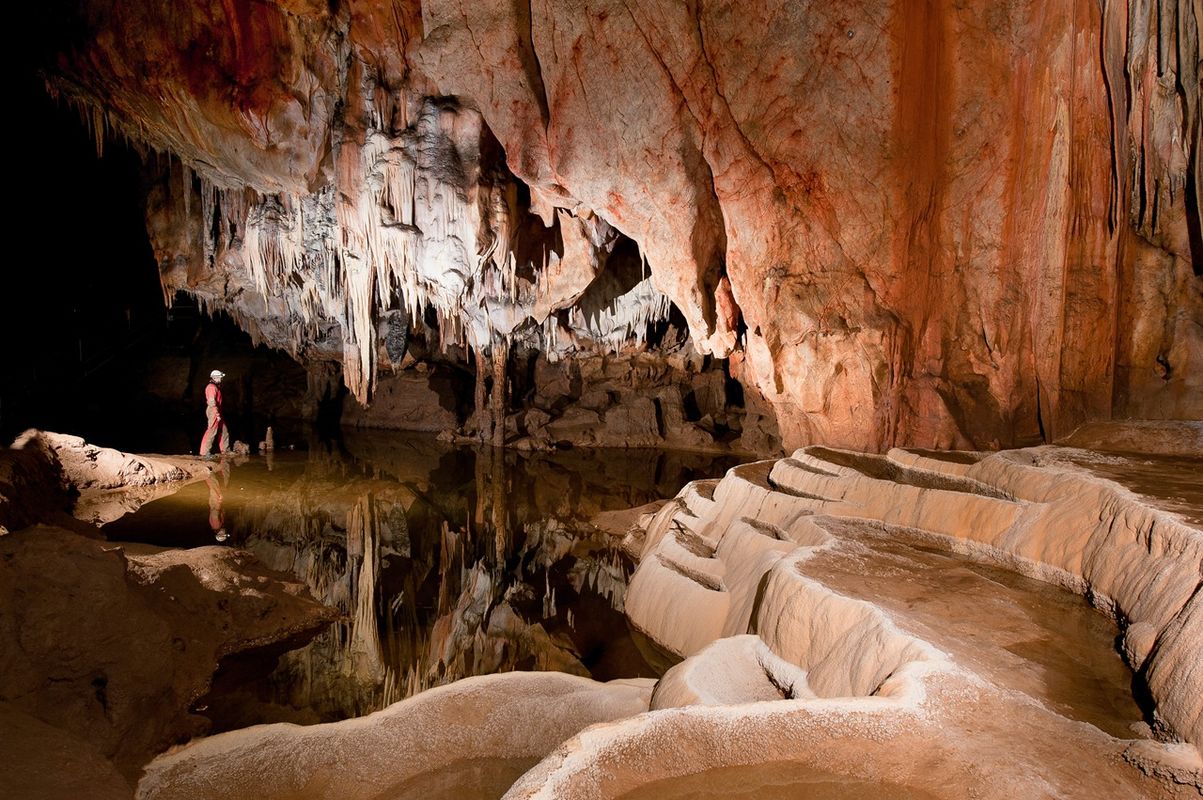
The Smolenice Karst is one of the most beautiful natural treasures of the Trnava Region of Experiences. Combined with pleasant spring weather, it offers the perfect invitation for a short yet experience-filled getaway. Within a relatively small area, hiking trails will lead you to two fascinating caves – Driny Cave and Monk’s Cave.
Driny Cave was for many years the only cave in the Little Carpathians open to the public. During winter, it provides shelter for up to eleven species of bats, but from April to October it is accessible to visitors accompanied by expert guides.
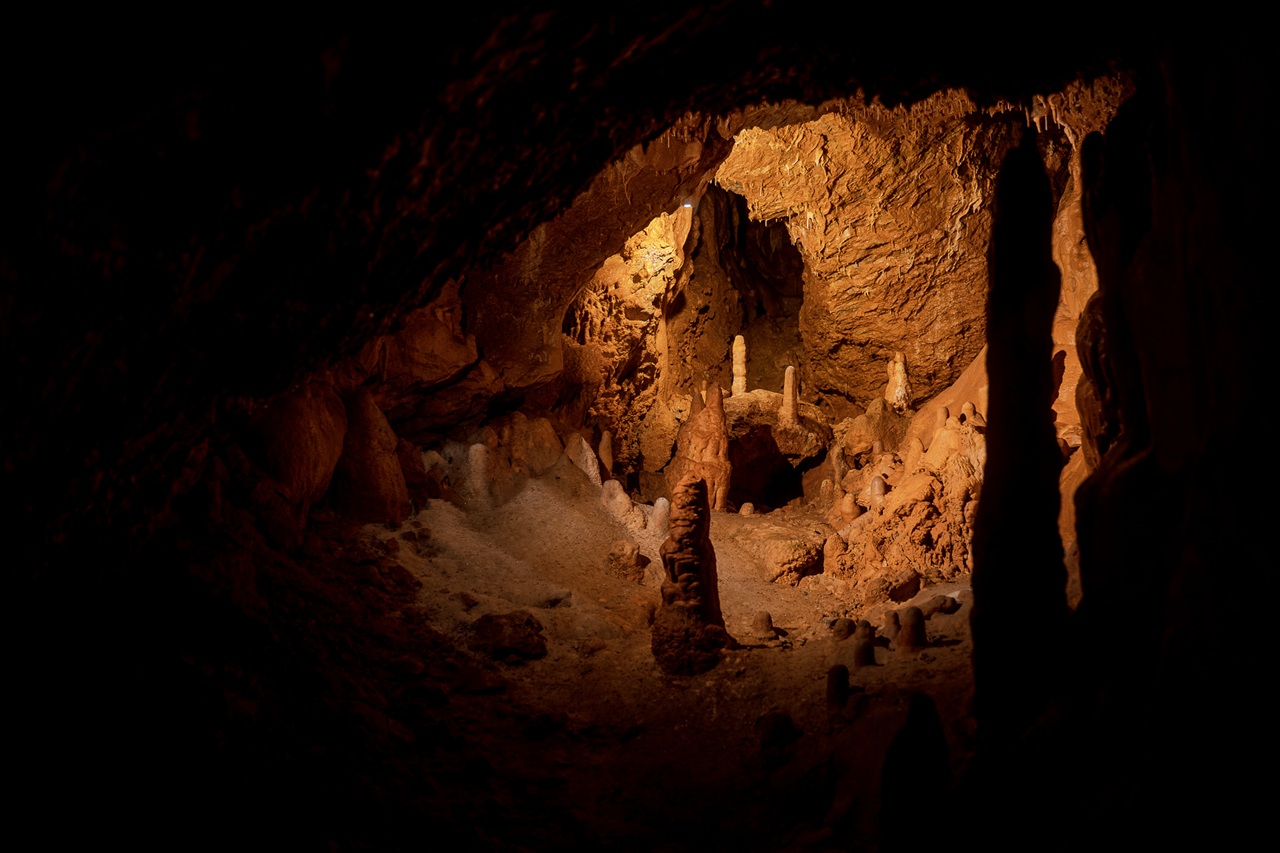
Photo: TTSK
During the tour, you will be captivated by its unique dripstone decoration, small sinter pools, and above all its symbol – Elephant’s Ears, unusually shaped sinter curtains. The stalactites with jagged edges are equally fascinating, as if carved by nature with incredible precision.
An interesting fact is that the cave was co-discovered by the son of the inventor of the parachute, Štefan Banič. And if you enjoy travelling in summer, Driny Cave is an ideal place to cool down – the temperature inside remains around 8 °C.
The Smolenice Karst Educational Trail connects Driny Cave with another cave of the Little Carpathians – Monk’s Cave, located approximately three kilometres away. The route is easy and, besides a pleasant walk, offers plenty of interesting information and beautiful views.
Although Monk’s Cave does not feature classic dripstone decoration, it impresses with pizolites – small, pea-like formations made of crystalline calcium carbonate. The cave is accessible all year round, so you can enjoy it in every season.
However, the Smolenice Karst is not only about caves. Towering majestically above the landscape is the romantic Smolenice Castle, while nearby lies Molpír Hillfort, one of the most important archaeological sites from the Iron Age. And a final tip for your trip? We recommend stopping in Smolenice to taste the world-famous mead.
The combination of nature, history, culture, and local products makes the Smolenice Karst an ideal destination for a relaxing weekend.
All the mentioned routes, as well as more trip ideas, can be found at krajzazitkov.sk.
The Underground World of the Trenčín Region
The underground has always attracted people with its sense of mystery and adventure. Caves, mines, and hidden urban passages conceal stories of the power of nature, hard work, and the lives of our ancestors. The Trenčín Region offers a diverse selection of places where you can descend beneath the surface and discover another fascinating world full of stories.
One of the region’s most valuable underground spaces is the Bojnice Castle Cave, hidden directly beneath Bojnice Castle. Just a few minutes’ walk from the castle, you will find another intriguing glimpse into the past – the Prehistoric Cave Museum in Bojnice. You can learn more about these sites in the section “Underground Treasures of the Upper Nitra–Bojnice Region”.
However, the underground of the Trenčín Region is not only about nature. Mining once played a crucial role here and permanently shaped life in the region. The atmosphere of mining tunnels is brought to life by the Coal Mining Exhibition in Handlová, where visitors symbolically descend “underground” and discover how coal extraction evolved from manual labour to the machinery of the 20th century. Authentic tools, mining technologies, and stories of the demanding work of miners—who shaped the identity of the Upper Nitra region—are all part of the experience.
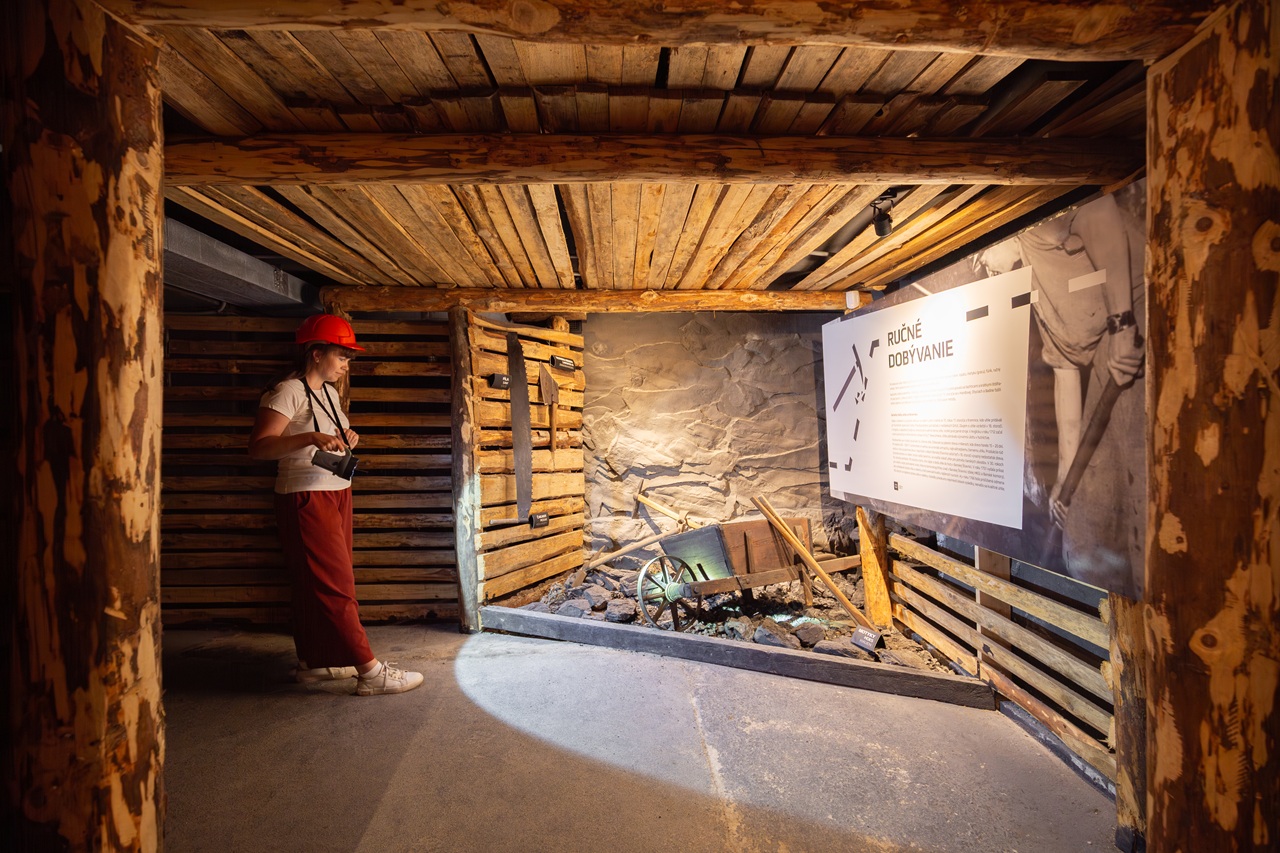
Photo: m-ark
Underground spaces are also closely linked to towns. Beneath the historic centre of Nové Mesto nad Váhom, for example, lies a surprisingly extensive system of cellars, corridors, and rooms, often on multiple levels. Its exact extent remains unknown, and no one knows where all the passages truly lead. This is why people speak of a “city beneath the city” – one of the greatest local historical mysteries. Today, the underground is not accessible to the public, but there are plans to restore and open it in the future.
Lovers of untouched natural sites will be captivated by the Pružina Dúpna Cave, hidden near the village of Pružina. It is one of the oldest caves in Slovakia, formed more than 10 million years ago. Its defining feature is the white coating of soft sinter, creating a delicate, almost “snow-like” effect on the walls. Thanks to its specific microclimate, it is associated with beneficial effects on the respiratory system. An educational trail from the village of Priedhorie leads to the cave. Entry is possible during the season by prior arrangement with local cavers, who share insights into its natural and historical significance.
The underground of the Trenčín Region forms a diverse mosaic of stories – from prehistoric dwellings and mining tunnels to mysterious urban labyrinths. Simply descend a few metres below the surface, and an entirely new world will open up, adding a unique dimension to your visit.
More travel inspiration can be found at trencinregion.sk.
The Považie Region Hides a Wealth of Unique Stories Beneath the Surface
Not all regional stories unfold on mountain peaks or in historic town centres. Some lie hidden deep underground – in caves, mysterious passages, and old cellars. If you are drawn to places with a distinctive atmosphere and wish to experience the region from a different perspective, the Považie Region offers several fascinating underground sites.
Just a short distance from Trenčín, in the village of Skalka nad Váhom, lies one of the most important pilgrimage sites in Slovakia – Skalka near Trenčín. In addition to the monastery and views of the Váh River, you can discover a lesser-known treasure here: two caves with intriguing histories.
The first is the Opatovská Cave, also known as the Cave Above the Road. It is a natural monument formed by the action of underground and seepage water. Although it does not feature rich dripstone decoration, its simplicity gives it a unique charm. It consists of two corridors with a total length of approximately 60 metres. The entrance is easily accessible, just a short walk from the road towards the Veľká Skalka Monastery.
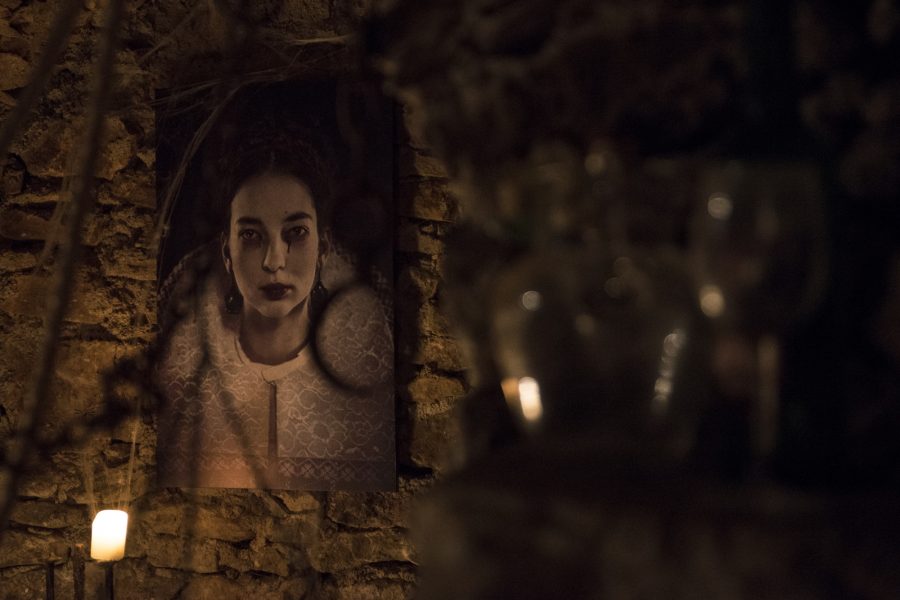
Photo: Čachtice Underground
A few dozen metres higher, directly within the monastery complex, lies the Benedict’s Cave. It is associated with the legend of the hermits Saint Andrew-Svorad and Benedict, who lived here an ascetic life during the Middle Ages. Interestingly, this cave is mentioned in one of the oldest written records referring to a cave in the territory of present-day Slovakia, dating back to 1220 and 1224. Today, it forms part of the monastery tour and offers a place of silence and contemplation. The monastery is open seasonally from April to October, with access in April and May limited to weekends.
Passages full of history and legends can also be found in the area around Čachtice. Beneath the village, known primarily for Čachtice Castle and the legend of Elizabeth Báthory, lies another fascinating world – an extensive underground system that began to take shape as early as the 16th century. Originally wine cellars, these spaces were gradually interconnected by local inhabitants into a complex network of corridors. Their main purpose was to provide protection against Ottoman raids. The underground included main passageways, shelters, as well as narrow crawl spaces known as “fox holes”, through which people could literally crawl to safety.
The corridors were designed with remarkable ingenuity. Narrow entrances allowed even a small group of defenders to hold off a larger force, while the entire system featured a sophisticated ventilation design. Later, the underground also served as a refuge for the Hutterites, who found shelter here in the early 17th century. It continued to serve practical purposes in more recent times as well – during the Second World War, it functioned as an air-raid shelter, where local residents spent entire nights during bombing raids. Today, part of the Čachtice underground is accessible through guided tours beneath the Drugeth Manor House.
You can round off your visit with a wine tasting at the Čachtice Vineyards Winery, located in the Little Carpathian wine region, Vrbové subregion. The local bedrock is unique and closely resembles that of the French Burgundy wine region. Viticulture here dates back to the Roman era, reaching its peak during the time of Elizabeth Báthory. Čachtice red wine was even enjoyed at the Viennese court of Empress Maria Theresa. Tastings take place in historically rich surroundings — on the very site where the Nádasdy family manor once stood. It was here that Elizabeth Báthory lived with her husband, Ferenc Nádasdy.
The underground of the Považie Region reveals the area from a completely different perspective. Instead of scenic views, it offers a journey into the past – into places where legends were born and where the silence of stone still prevails.
More information and interesting insights about the region can be found at regionpovazie.sk.
Underground Treasures of the Upper Nitra–Bojnice Region
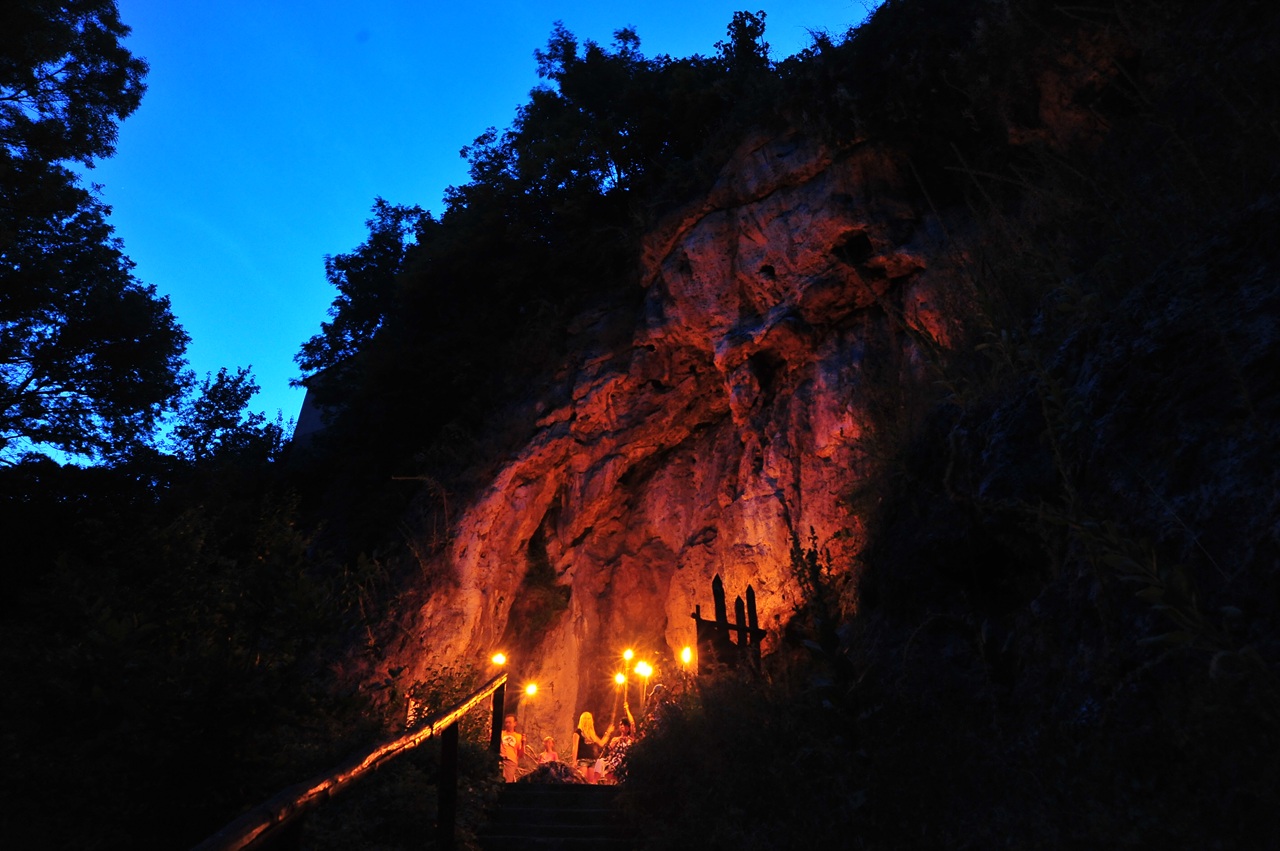
Photo: OOCR RHNB
Bojnice Castle is one of the most visited landmarks in Slovakia. But did you know that part of its richness lies hidden underground? Few castles can boast their own subterranean world. The Castle Cave beneath Bojnice Castle once served as both a shelter and a water reservoir for the castle’s inhabitants. This natural travertine chamber, with a diameter of 22 metres, is directly connected to the castle well. Today, visitors can admire it as the highlight of the standard guided tour.
Right in the historic heart of Bojnice, at the foot of a travertine mound, you will discover one of the most significant Paleolithic sites in Europe – the Prepoštská Cave. It is now home to the Prehistoric Museum, which immerses visitors in the life of Neanderthals. Thousands of years ago, our ancestors found shelter here from the cold, close to thermal springs. Today, you can experience unique night tours by torchlight. The atmosphere of flickering flames and shadows dancing on the cave walls sparks the imagination and transports you back to the age of mammoth hunters. It is one of the most powerful experiences in the region, where history is not only told, but truly felt.
For lovers of active hiking and authentic caving experiences, the surrounding mountains offer two freely accessible gems. The Hajská Cave is a 25-metre-long tunnel-like space in the Žiar Mountains, reached via the pleasant Remata – Ráztočno Educational Trail. The Brložná Cave, on the other hand, lies hidden in the Strážov Mountains above Nitrianske Sučany. This fissure cave impresses with its raw natural beauty and is a popular destination for local hikers seeking tranquillity and a connection with untouched nature.
A true natural rarity of the Nitrica Hills is the Vestenice Bear Cave. Its story began as recently as 2008, when cavers discovered it almost by chance – by following the tracks of a badger that disappeared into an inconspicuous hole in the ground. The cave, now a protected natural monument, contained thousands-of-years-old bones of cave bears. Although it remains closed to the public for most of the year to protect its delicate sinter formations and hibernating bats, there is one exception. Each year on 5 July, visitors have a unique opportunity to explore its interior as part of a guided expert tour. It is a rare chance to encounter a “living” underground world that carefully guards its secrets.
More tips for activities in the region can be found at bojnice.eu.
Mining That Shaped the World – Stories of the Banská Bystrica Region
The history of the Banská Bystrica Region is closely intertwined with mining. It shaped not only the development of the region itself, but also the history of Europe. For centuries, precious metals, copper, and iron were extracted here, giving rise to technologies, trade networks, and stories that reached far beyond the borders of present-day Slovakia. Mining was not merely a craft – it was a driving force of the economy, innovation, and international trade. Today, visitors can follow its traces in almost every corner of the region.
One of the most remarkable stories is the establishment of the renowned Thurzo-Fugger Copper Company, whose origins date back to the turn of the 15th and 16th centuries. The cooperation between the Thurzo family and the wealthy Fugger family of Augsburg created one of the world’s first major international industrial enterprises. Copper from central Slovak mines was exported across Europe and even reached global markets. The company introduced new technologies, modern production management, and trade innovations that were exceptional for their time. Today, visitors can explore this fascinating story at the interactive Thurzo-Fugger exhibition in the centre of Banská Bystrica.
Mining history, however, is not confined to museums. In the surroundings of Nová Baňa, you can set out on a thematic walk along the route “Following a Miner Through History”, which leads along two educational trails through sites where mining life once thrived. During an approximately two- to three-hour walk with a guide – a miner – you will discover historic adits, shafts, and technical facilities once used in the extraction of precious metal ores.
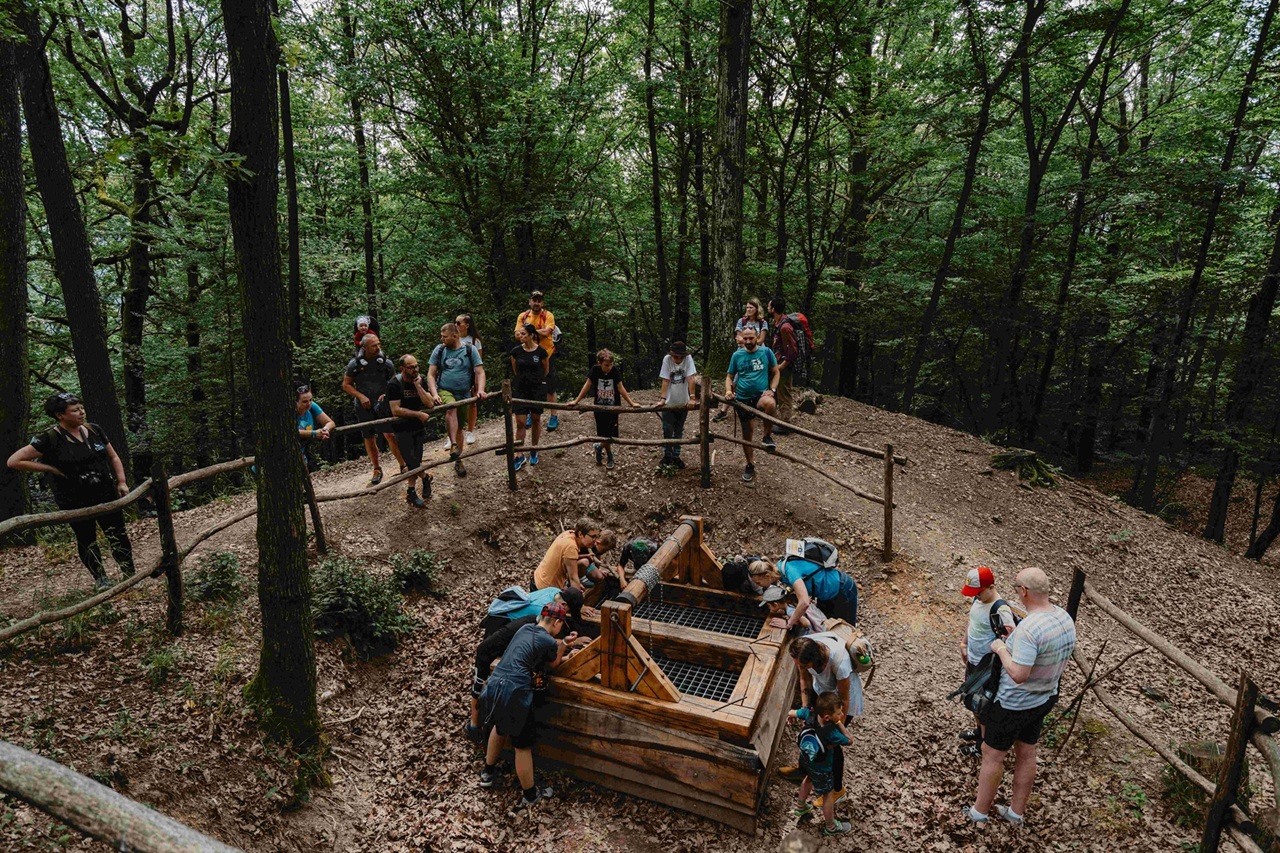
The routes offer different perspectives on mining history. The green trail leads through the Vŕšky locality and represents an easier walk in an environment reflecting mining from the 16th to the 19th centuries. Along the way, you will reach the historic Althandel Shaft, above which once stood Potter’s Fire Engine – a technical rarity of its time. The black trail, on the other hand, runs through the forests of Mýtny vrch and Gupňa, revealing further traces of intensive mining activity from the past.
If you wish to experience the true atmosphere of the underground, head to the historic mining town of Kremnica, where the Andrej Adit is sure to impress. It is one of the most remarkable accessible mining sites in Slovakia. The guided tour allows you to step into the authentic environment of historic mining tunnels and discover what miners’ work looked like in the past.
From the heart of the Banská Bystrica Region, you can continue to Gemer, once known as the iron heart of the Kingdom of Hungary. Thanks to rich iron ore deposits, important mining and metallurgical centres emerged here, supplying metal to much of the country. Today, you can explore this chapter of history, for example, in the mining exhibitions in the village of Rákoš or in the town of Hnúšťa. Here, you will discover stories of iron ore mining, historic technologies, the daily lives of miners, and an authentic insight into the region’s industrial past.
Mining remains one of the most defining stories of central Slovakia to this day. Through modern exhibitions, educational trails, and accessible adits, you can explore a world that once shaped the economy of Europe and has left countless traces in the landscape.
Further information and tips for activities in the region can be found at zahoramizadolami.sk.
Underground Treasures and Wine Stories of Central Slovakia and the Hont Region
Mining adits, caves, and ancient wine cellars – all these places hold pieces of history that often remain hidden beneath the surface. For centuries, stories of labour, craftsmanship, trade, and everyday life unfolded underground, shaping the character of entire regions.
Central Slovakia and the Hont Region are among the areas where the underground plays an especially significant role. In some places, it tells of a rich mining past; elsewhere, it reveals natural beauty or a winemaking tradition passed down through generations. Each site offers a slightly different experience, yet all are united by authenticity and a unique atmosphere.
If you wish to discover the region from a different perspective, follow the traces of underground spaces that reveal Central Slovakia and the Hont Region as places of history, nature, and flavour.
One of the most renowned mining villages in Slovakia is undoubtedly the picturesque Špania Dolina. Since 2022, visitors can explore the Špania Dolina – Piesky Mining Water Gallery, the only accessible underground route in this area. This tunnel, approximately 1.6 kilometres long, brings the history of local mining and the lives of miners closer to visitors.
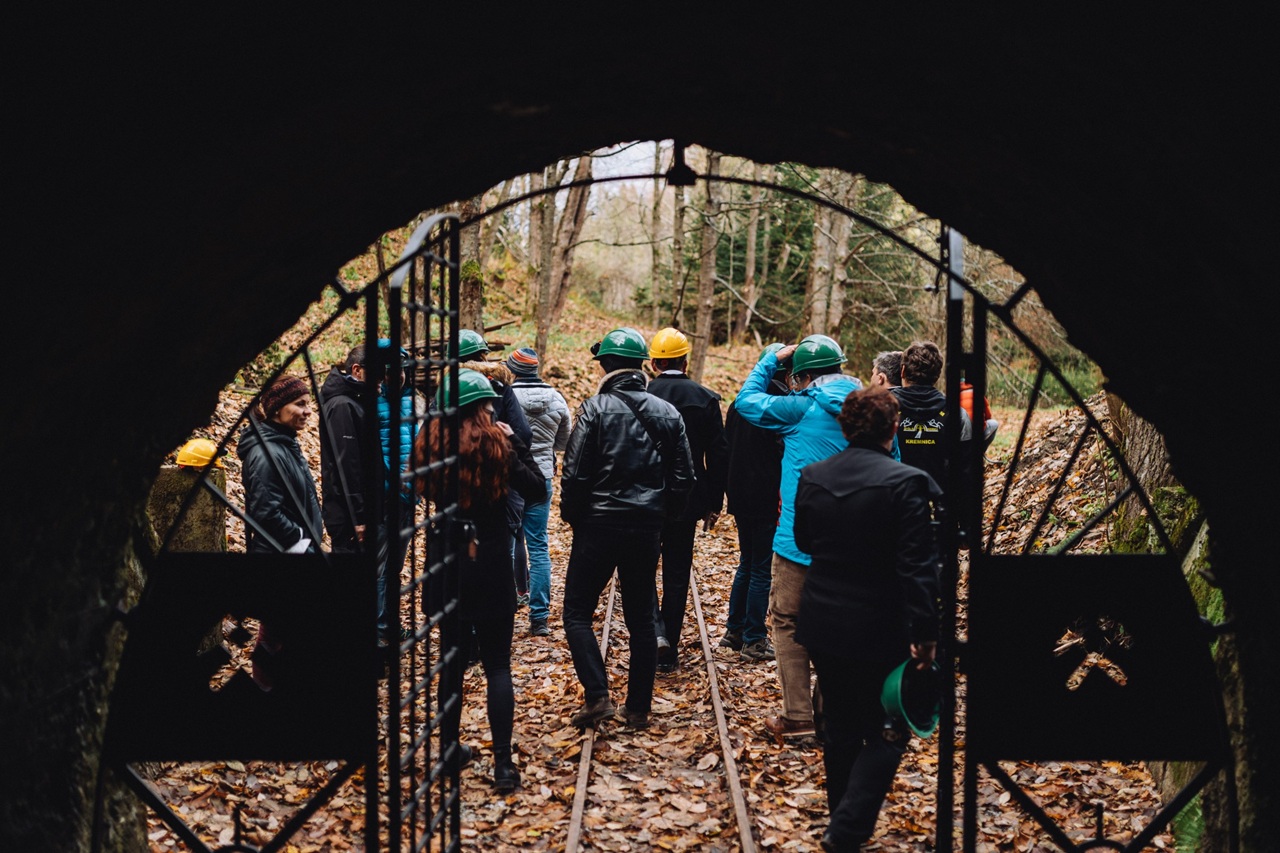
An important site in the region is the Mining Museum – Andrej Adit in Kremnica, where visitors walk through part of the historic underground and learn about the extraction of gold-silver ore that made the town famous across Europe. Right on Štefánik Square in Kremnica stands the Franciscan Monastery, an important historical monument that is gradually coming back to life after years of neglect. The restored cloister courtyard and entrance areas are expected to open to the public soon, followed by the underground spaces with crypts in a later phase.
Not all underground secrets were created by humans. The natural underground world can be explored at the Harmanec Cave near Banská Bystrica. It is known for its rich sinter decoration, stalagmites, and the presence of several bat species. A tour of the accessible section takes approximately 80 minutes.
Have you heard of the Krupina Underground? Beneath the historic centre of Krupina lies a network of cellars, most likely of medieval origin. Today, it introduces visitors not only to the town’s history but also to legends of the Krupina witches. The cellars are also home to the Hont Wine Salon, showcasing a selection of the region’s finest wines from the Hont Wine Barrel competition.
You can also experience the region’s winemaking tradition during the Hont Wine Route event, when dozens of winemakers open their cellars from Krupina to Dudince. One of the most picturesque locations is Stará Hora in Sebechleby, where around 140 tuff cellars and vineyard houses have been preserved.
The underground of Central Slovakia and the Hont Region continues to tell stories of mining, nature, and winemaking traditions – all you need to do is step inside and discover the history hidden beneath the surface.
All essential information about the region can be found at centralslovakia.eu.
Set Out on an Unforgettable Journey into the Depths of the Štiavnica Mines
The greatest wealth of Banská Štiavnica has for centuries been hidden deep beneath the surface. The underground of Štiavnica offers a unique insight into the hard work of miners and the fascinating beginnings of mining in the entire region. If you truly want to understand the spirit of this place, you must leave daylight behind and descend into the labyrinth of adits woven beneath the town and the surrounding hills.
Long before mining activity moved deep beneath the cobbled streets of today’s town centre, life thrived on the hill above. The Old Town on Glanzenberg Hill is an archaeological site of European significance. It was here that the original fortified settlement stood, predating present-day Banská Štiavnica. A walk through this site reveals the foundations of medieval buildings and the remains of defensive lines, from where early miners guarded access to rich ore veins.
A unique view of how ore was extracted in its shallowest layers can be found at the Barlangy site in Kysihýbel. Unlike deep shafts, these are monumental surface excavations created by mining ore veins that reached the surface. These open rock canyons and chamber-like formations resemble caves and stand as testimony to early, extremely demanding labour. It is also one of the few places where you can observe mining techniques in the open air.
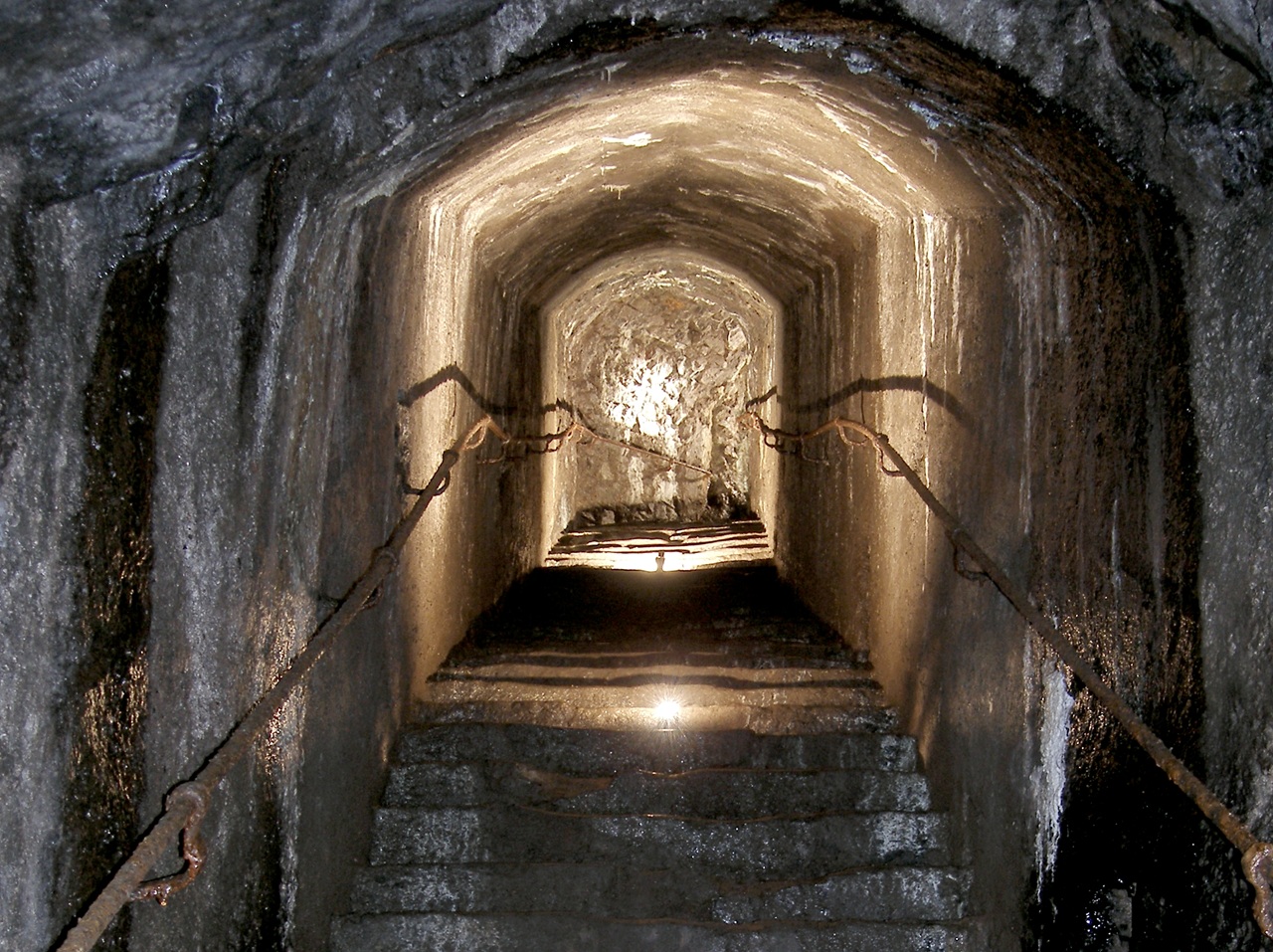
Photo: Lužina
The most comprehensive journey underground is offered by the Mining Museum in Nature (Open-Air Museum). Here, you will be equipped with a coat, helmet, and miner’s lamp before entering the Bartolomej Adit, where you can experience the authentic atmosphere of the underground. Walking through narrow tunnels, you will discover the technological evolution of mining – from manual excavation to modern machinery.
The pride of the town is also the Glanzenberg Hereditary Adit, whose entrance can be found directly on Kammerhofská Street. This adit once served as a “royal route” for distinguished visitors – commemorative plaques left by emperors Francis Stephen of Lorraine, Joseph II, and Franz Joseph I mark their visits underground. Today, during a guided tour, you can follow in their footsteps and admire the hand-carved tunnels that support the historic centre of the town.
The underground of the region is, however, far more extensive. Beneath the pavements of burgher houses, as well as in nearby villages, lie hundreds of kilometres of corridors, historic adits, and period cellars that are currently inaccessible to the public. These spaces form the invisible skeleton of the region, lending it an aura of mystery and reminding us that the underground of Štiavnica has not yet revealed all its secrets.
Whether you choose to climb up to the Old Town, explore surface excavations, or venture into deep adits, the underground of Banská Štiavnica will open the door to a world that shaped the history of Europe. Current opening hours and booking options for underground tours can be found at muzeumbs.sk.
More information and interesting facts about the region can be found at banskastiavnica.travel.
The Mysterious Underground World of Horehronie
The Horehronie Region is known for its wild nature, mountain panoramas, and the authentic atmosphere of central Slovakia. Less well known, yet equally fascinating, is the world hidden beneath the surface. The underground of Horehronie conceals unique caves that attract visitors with their beauty, mystery, and sense of adventure. Two of them – Bystrianska Cave and the Cave of Dead Bats – rank among the most important underground attractions in the region.
On the southern side of the Low Tatras, near the village of Bystrá, lies one of the most beautiful accessible caves in Slovakia – the Bystrianska Cave. It was discovered as early as the 19th century and gradually became a major tourist attraction in the region. The cave is known for its rich sinter decoration, stalactites, stalagmites, and underground spaces that create a unique atmosphere. The tour route leads through several halls and corridors with poetic names, enhancing the overall visitor experience.
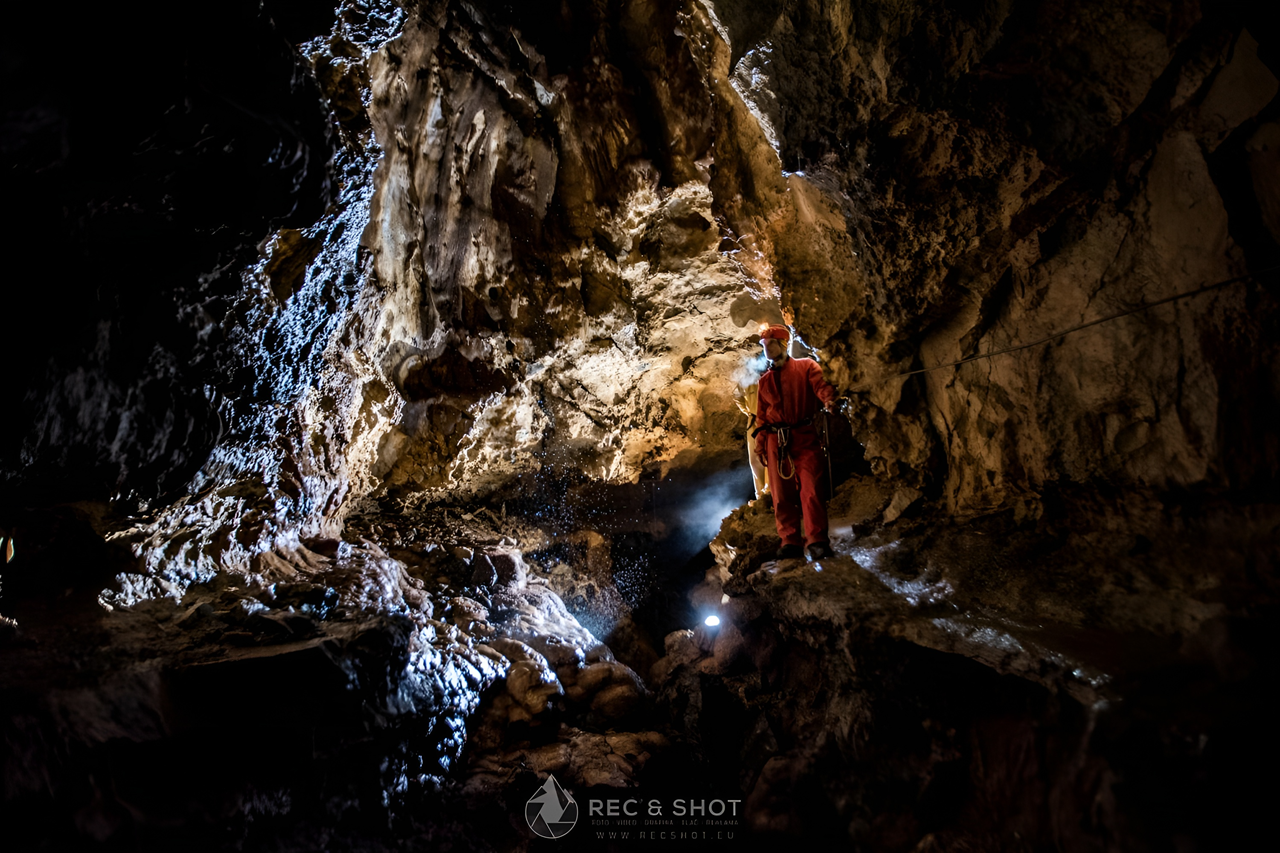
Photo: OOCR REGIÓN HOREHRONIE
An interesting feature is that part of the cave is also used for speleoclimatic therapy, particularly for respiratory conditions. The stable temperature, high air purity, and specific microclimate create ideal conditions for regeneration. Visitors can combine a cave tour with trips in the surrounding area – whether hiking in the Low Tatras, cycling, or exploring traditional Horehronie villages.
For adventure enthusiasts, Horehronie offers a unique experience in one of the highest-altitude caves in Slovakia – the Cave of Dead Bats. Located in the massif of Chopok in the Low Tatras, it gained its unusual name from the discovery of bat skeletons found in its underground spaces. The cave is among the longest and deepest in Slovakia and is also one of the few where visitors can embark on a true caving adventure.
Unlike typical show caves, visits here take the form of experience-based tours. Visitors wear overalls and helmets with headlamps and explore the underground much like real speleologists. Moving through narrow passages, climbing over rock blocks, and discovering underground chambers make this an unforgettable, adrenaline-filled experience.
If you want to experience Horehronie from a different perspective, venture beneath its surface. The world of stalactites, underground passages, and the silence of caves will reveal an entirely new dimension of this remarkable region.
More tips for trips in Horehronie can be found at horehronie.sk.
Discover the Underground World of the Tatras
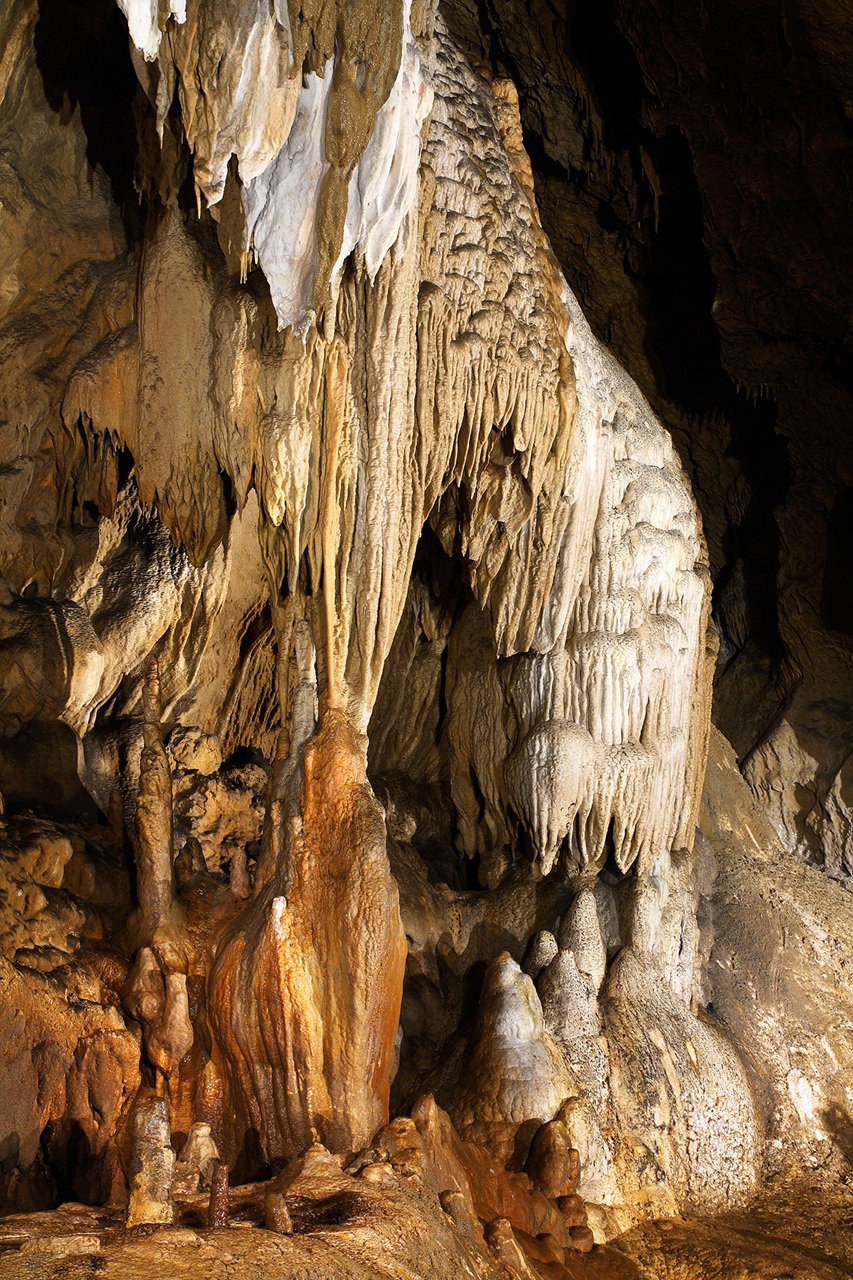
Photo: Slovak Caves Administration
On the northern edge of the Belianske Tatras, near Tatranská Kotlina, you will discover a place that has inspired awe, respect, and curiosity for centuries. The Belianska Cave is the only cave in the Tatras open to the public and ranks among the most valuable natural treasures of the northern Spiš region. Beneath the mountain surface lies a silent world of stone chambers, dripstone formations, and underground lakes, shaped over thousands of years.
The story of the cave is closely linked to the people who once lived in this region. According to historical records, it was discovered in the 18th century by local gold prospectors. While searching for precious metals, they came across a narrow opening in the rock that led them into a previously unknown underground space. Curiosity and courage drove them deeper into the mountain, where they gradually uncovered vast domes, corridors, and dripstone formations.
Over time, the cave became known among travellers and naturalists. It was opened to the public as early as 1884, making it one of the oldest accessible caves in Slovakia. Today, its underground system stretches over more than 3.5 kilometres, with approximately 1.3 kilometres accessible during guided tours.
One of the most remarkable parts of the cave is the Music Hall, renowned for its exceptional acoustics. In the past, classical music concerts were even held here, and visitors still describe the unique atmosphere of this space. The silence of the cave, the dripping water, and the sound of music created an unforgettable experience.
Belianska Cave is more than just a natural attraction. For many visitors, it is a place to slow down and reflect on the power of nature and time. Its surroundings also offer further opportunities to explore the region, with hiking trails leading to Monkova Valley or the village of Ždiar.
Belianska Cave is a place where human stories, regional history, and the fascinating beauty of nature come together. For visitors, it offers a truly unique experience and the chance to discover one of the hidden gems of the Tatras.
More information about the cave and current tours is available at ssj.sk/sk/jaskyna/2-belianska-jaskyna. Everything you need to know about the region can be found at tatryspispieniny.sk.
Hidden Mysteries of Stará Ľubovňa
A visit to Stará Ľubovňa would not be complete without a stop at the local castle. Beneath the western Renaissance bastion, you will come across narrow underground passages – casemates. These once housed eight cannon embrasures forming the first line of defence of the bastion. When cannons were fired, large clouds of smoke would fill the space. To prevent suffocation, the gunners relied on small ventilation openings, which can still be seen in the bastion walls today.
According to legend, the casemates once contained entrances to three secret passages. One was said to lead to Poland, another to the heart of the town – to the Church of St. Nicholas – and the third to the nearby Plaveč Castle. Exiting the underground through a Late Gothic gate, you step into another world – the oldest parts of the castle. The underground of the Gothic palace hides yet another rarity – the castle rock itself, in which the very “heart of the castle” is believed to beat. An engaging visual installation can be seen here throughout the summer season, starting this year on 25 April 2026.
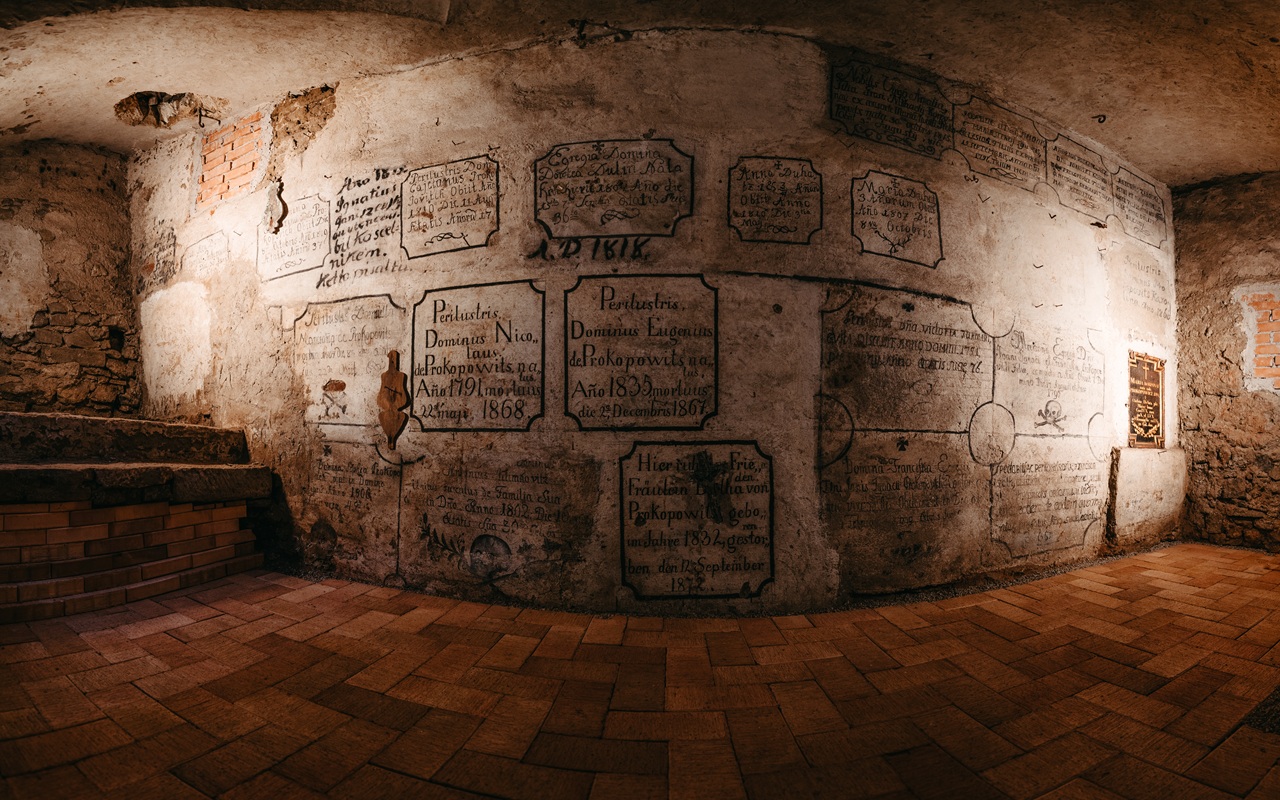
Looking for a truly unusual experience? Discover the crypt beneath the Church of St. Nicholas in the centre of Stará Ľubovňa. Burghers from the 18th century are buried here. The space is open to the public only once a year, during the All Souls’ Day period. However, it can also be visited during a guided tour of the church upon prior arrangement by phone or email through the local Information Centre.
Important information and interesting facts about the region can be found at visitspis.sk.
Adventures Deep in the Slovak Paradise and Spiš Underground
If you have ever visited Slovenský raj and the surrounding southern Spiš region, you know its natural and cultural treasures above ground. But how about a little adventure deep underground? Join us as we explore the ice kingdom in Slovakia’s largest ice cave and follow the traces of miners and mining history in the accessible mining tunnels.
The Slovenský raj National Park hides a place where you can experience a magical winter scene even during the hottest summer days. This is the world-famous Dobšiná Ice Cave, whose icy interiors have been forming for tens of thousands of years. In addition to being listed as a UNESCO World Natural Heritage Site, it holds several global “firsts.”
It is the lowest-located ice cave in the world and also the cave with the largest ice volume. It was opened to the public in 1871, and in 1887 it became one of the first caves in Europe with electric lighting.
Before visiting Dobšiná Ice Cave, be sure to dress warmly. The temperature inside remains around zero degrees Celsius year-round. Also, wear sturdy footwear. On the 475-meter visitor circuit, you must climb approximately 500 steps. The cave is open to the public from 15 May to 15 September, every day except Monday.
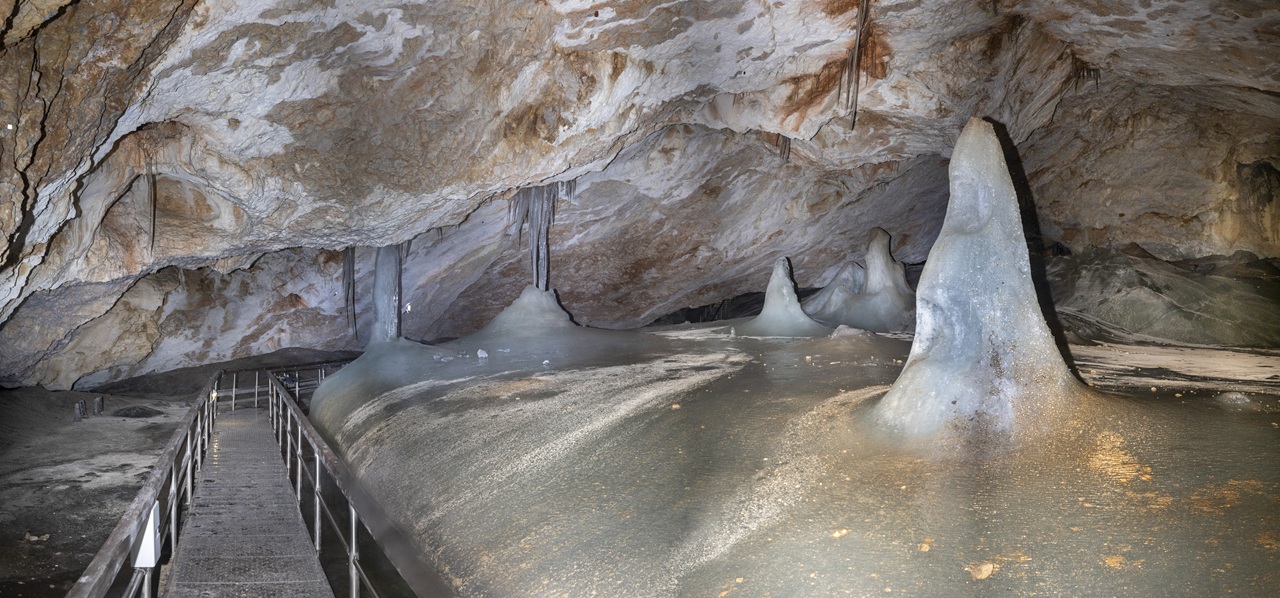
Photo: Miloš Greisel
The region’s history is closely tied to mining. The skilled people of Spiš long ago discovered that the surrounding mountains were full of valuable treasures. The legacy of Spiš miners can be explored in several mining museums and open-air museums, which also take you inside old mining tunnels. One example is Ľudmila Tunnel in Hnilčík – Ráztoky, which was once used as an explosives storage. Guided tours are offered by the Hnilčík Mining Open-Air Museum, which features a fascinating museum exhibition and four educational trails around the area. Visits require prior telephone registration.
You can also explore mining underground in the historic royal mining town of Gelnica. The Mining Open-Air Museum and Educational Mining Trail include replicas of mining machines, a mining train, and the accessible Jozef Tunnel, which stretches 1,650 meters. Don’t miss the Mining Museum in the town center, showcasing the rich mining history of the area.
While visiting southern Spiš, make time for the picturesque Poráč Valley near the village of Poráč. Here you will find natural beauty as well as the Mining Open-Air Museum with original mining machines, a mining train, and three educational trails leading to an old mining tower, mining tunnels including Peter Tunnel, and the mysterious Šarkanova Cave.
If you are eager to uncover more mining secrets in Spiš, visit the town of Dobšiná with the Educational Trail Following Mining History in Dobšiná and the village of Rudňany with its Mining Educational Trail and Mining Exhibition at the Mining Archive.
For more tips and information from the region, see vraji.sk.
Venture into the Depths of Šariš
The Šariš region offers more than scenic views, historic towns, and folk traditions. Beneath the surface, caves, old mining works, and cellars reveal that the underground world is as rich and diverse as the landscape above. Curious explorers will find these sites a fascinating way to discover a lesser-known side of the region.
Between Prešov and Košice, near the village of Červenica, lies a volcanic mountain range hiding a global treasure: the largest and oldest opal mines in the world. This mysterious underground labyrinth of tunnels stretches over 35 kilometers and serves as a wintering site for 16 species of bats, totaling more than 8,000 individuals.
The mines are open to the public through guided tours, where visitors descend into historic tunnels and learn about the challenging work of miners and the fascinating formation of opal. The basic one-hour circuit is easy terrain with no significant elevation, suitable for both adults and children. Tours begin at Jozef Tunnel daily, with tickets required in advance.
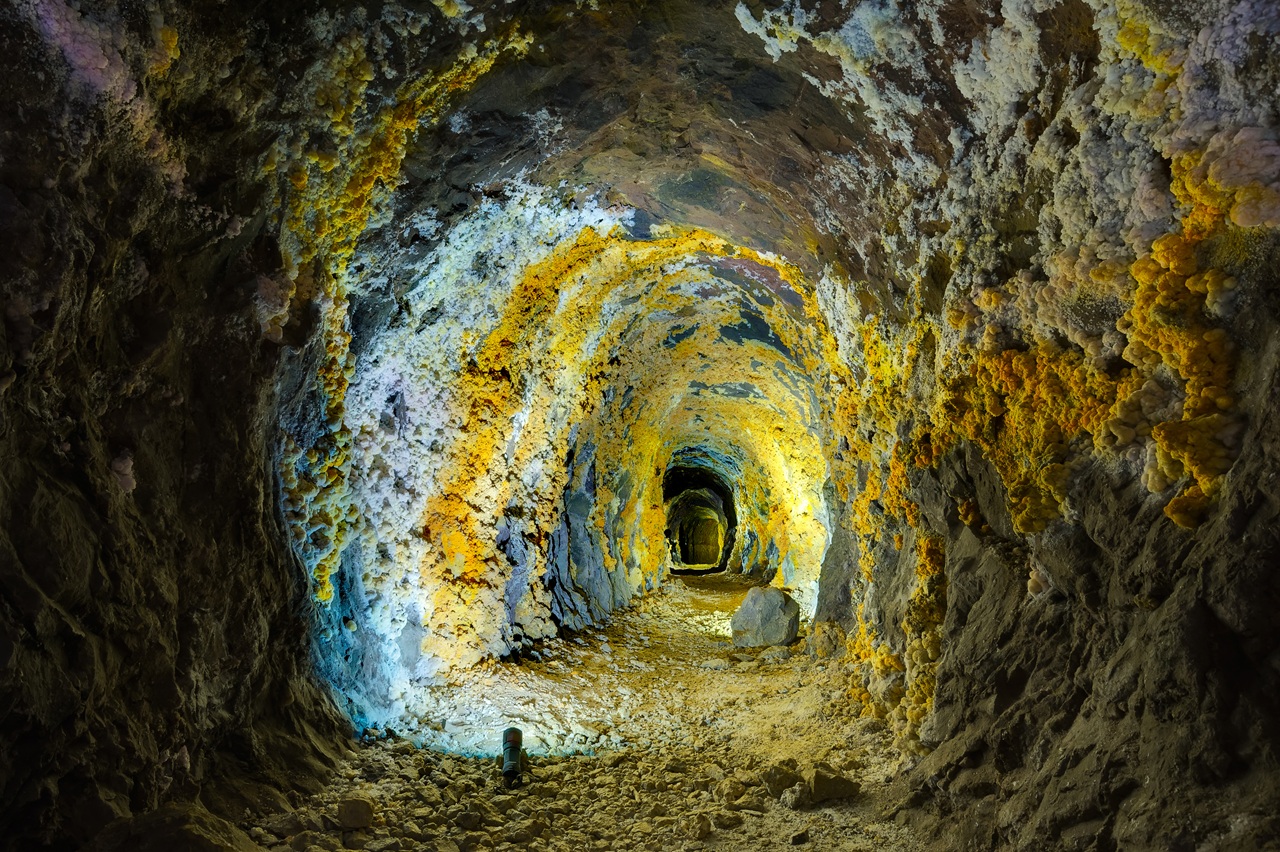
Photo: OOCR Region Šariš
Nature enthusiasts should not miss Zlá diera Cave. This smaller cave in the Branisko mountains near the village of Lipovce is the only known cave in the Prešov district and has been open to the public since 1999. It has no electric lighting, so visitors use traditional carbide lamps or their own light. Paid entry is available from April to November, with prior phone reservation recommended.
Underground wonders are not only natural. In the center of Prešov, the exceptional Wine Museum occupies 500 square meters across two floors of 500-year-old historical cellars beneath the town hall. The largest and most beautiful room is the tasting hall.
Prešov has a historic connection to salt. The Salt Cave is artificially created, yet its microclimate mimics natural salt caves. It contains around 4,000 kilograms of salt, beneficial for the human body. Visits enhance immunity and help relieve stress and tension amid gentle relaxing music and soft lighting.
For more information about the Šariš region, visit regionsaris.sk.
Underground Wonders of the Košice Region – Famous Caves of Gemer
Gemer is a historic region in southern Slovakia, spanning the Banská Bystrica and Košice regions. It is a karst area renowned for its numerous beautiful and often unique caves. No other region in Slovakia is as rich in caves as Upper Gemer.
Over 1,300 caves and pits have been discovered in the Slovak Karst plateau, many notable for their geological structures and natural value. These caves are among Slovakia’s greatest natural treasures, attracting visitors from all over the world. Their importance is highlighted by the UNESCO World Heritage listing of the Slovak and Aggtelek Karst caves.
The most famous and longest accessible cave in Slovak Karst National Park is Domica, celebrating 100 years since its discovery this year. Visitors are enchanted by its rich speleothem decorations – cascading pools, onion-shaped stalactites, and pagoda-like stalagmites. The tour route is approximately 780 meters long and takes about 45 minutes to complete.
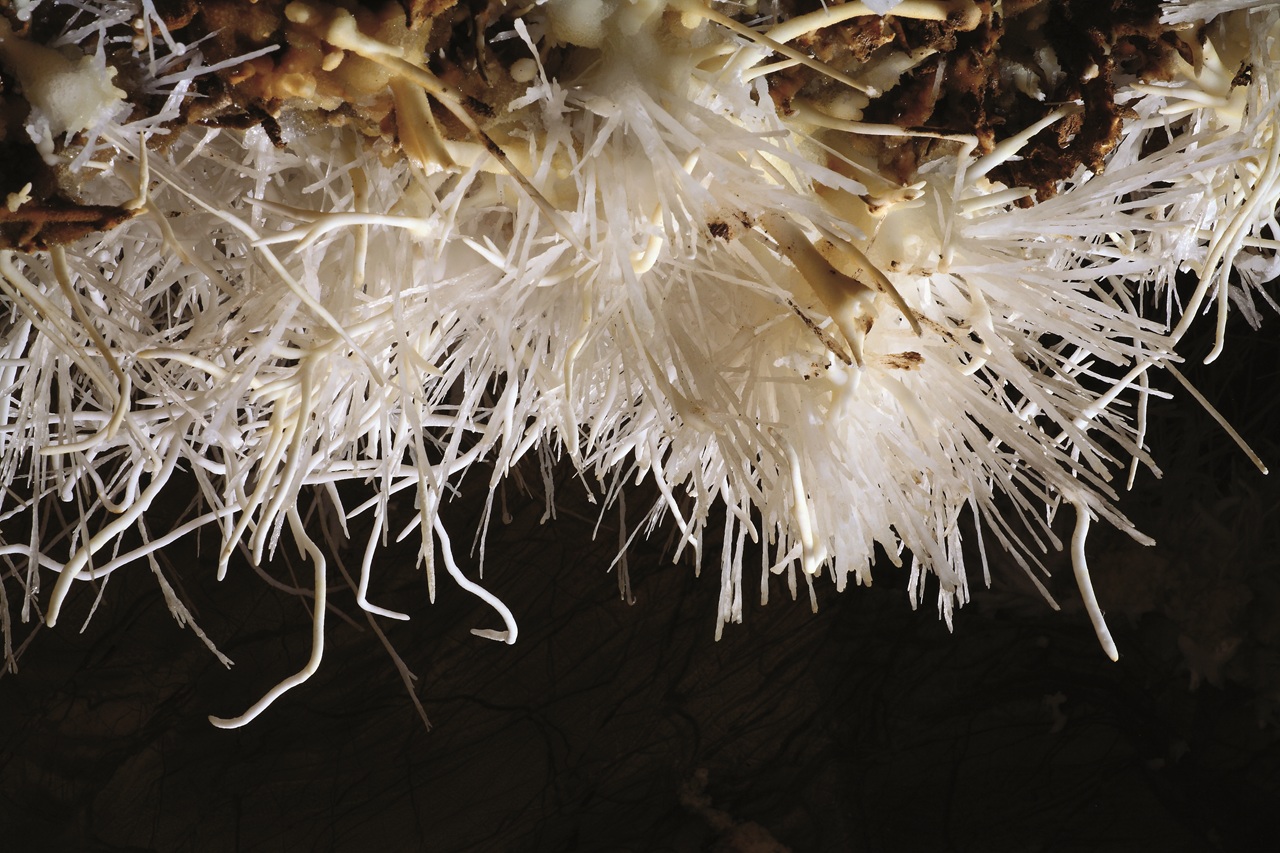
Photo: Michal Rengevič
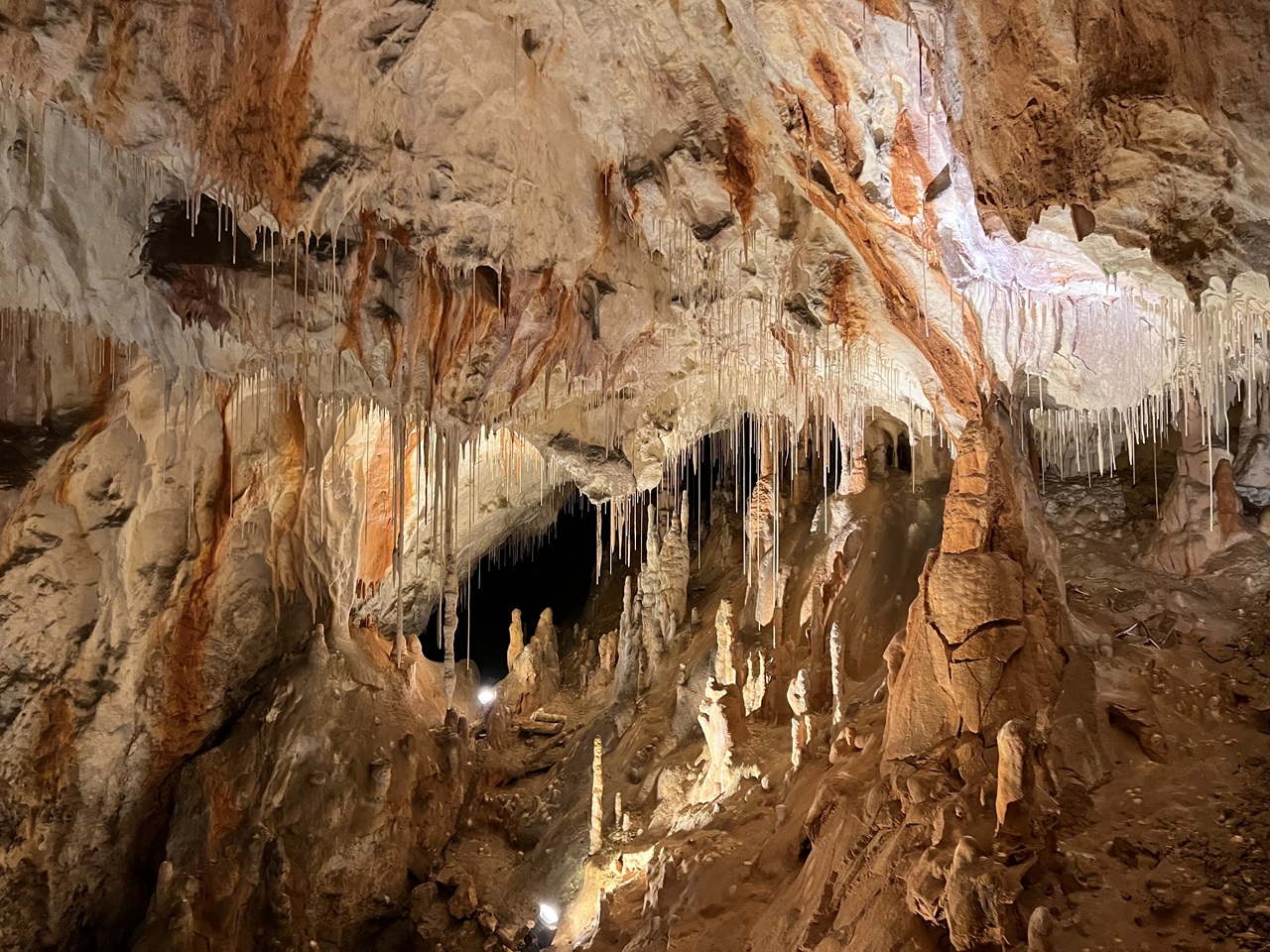
The cave serves as an important refuge for bats, with up to 16 species inhabiting it. A unique experience for visitors is the underground boat ride on the Styx River, which depends on the water level. Domica, together with the Hungarian Baradla Cave, forms an approximately 25-kilometer-long cross-border cave system.
Ochtinská Aragonite Cave is one of the world’s rarest caves. It is famous for its unique aragonite formations, resembling delicate corals or bush-like structures. There are only four accessible aragonite caves worldwide, and the Slovak cave is among the most beautiful. It was discovered in 1954 and has been open to the public since 1972. Visitors can explore about 230 meters of its underground spaces.
The cave’s highlight is the famous Hall of “Iron Flowers”, which formed over thousands of years under specific chemical conditions. This mineral treasure, up to 140,000 years old, resembles fragile marine corals more than cold stone, showcasing the fascinating geological evolution of our planet.
In contrast to the white aragonite flowers, the Dobšinská Ice Cave offers a spectacular icy landscape. Historically, Serbian King Milan I and Bulgarian Tsar Ferdinand I skated here, and today visitors can admire over 110,000 cubic meters of ice. This underground glacier has survived millennia due to the cave’s sack-like shape, which traps heavy cold air, forming breathtaking ice pillars and cascades reaching up to 70 meters deep.
Near Rožňava, at the western foot of the Silická Planina in Slovak Karst National Park, you can explore Gombasecká Cave. It is famous for its exceptionally long soda straw stalactites, some reaching up to three meters. In addition to its rich formations, the cave is biologically interesting, hosting the rare cave millipede from the genus Typhloiulus.
The cave is part of the extensive underground hydrological system of the Slovak Karst. Its passages were formed by the underground flow of the Čierny Potok stream, with a total length exceeding three kilometers, of which approximately 285 meters are accessible to visitors.
The underground of the Košice region and Gemer offers a unique combination of natural beauty and geological wonders. The caves are generally open every day during the tourist season, except Mondays.
For more information and travel tips, visit kosiceregion.travel and regiongemer.sk.
Authentic Underground Secrets of Košice
Set out to explore the underground secrets in eastern Slovakia, in Košice, and bring back unforgettable memories. Discover tips for the nearby area with underground corners and fantastic places worthy of a private tour right in the city center.
Base your travels in Košice and venture to uncover the natural underground wonders nearby. Jasovská Cave in the village of Jasov offers a tour of a 720-meter corridor with exceptional stalactite formations and historical inscriptions from Hussite battles. Close by, the legendary Gemer region awaits with its numerous unique caves. Have you heard of the Silická Ice Cave? It is the lowest-lying ice cave in Slovakia, inhabited since the Neolithic era.
You can also explore the history of Košice and its surroundings through the stories embedded in its monuments and museum exhibitions. In the heart of the lively Hlavná Street, visit the Slovak Technical Museum, which presents the former glory of the mining region with authentic replicas of adits, a bucket loader from 1958, the Manda drilling vehicle, a single-arm drilling machine by Salzgitter Maschinen AG from 1957, and mining carts. The underground exhibition is a stunning, detailed work by academic sculptor Arpád Račko, whose works also adorn Košice’s parks and streets. The authentic mining atmosphere is enhanced by the sound of a rake conveyor from 1957.
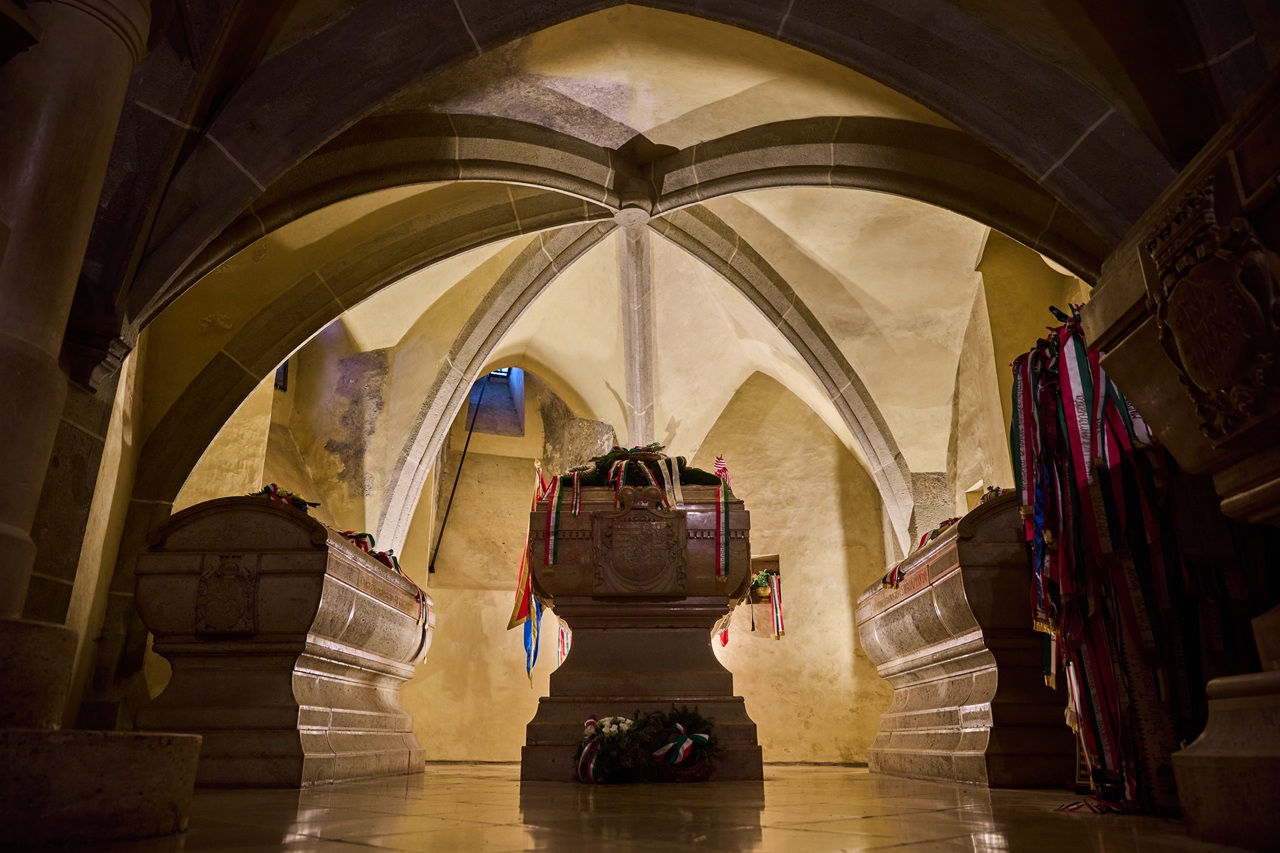
Learn more about Košice’s history and get closer to the central figure of the anti-Habsburg uprisings. The turbulent life of the Transylvanian prince, Francis II Rákóczi is revealed in an exhibition in the replica of his Turkish house called Rodošto, near Hlavná Street. The final resting place of this legendary figure is hidden underground in the Cathedral of St. Elizabeth in the crypt with his sarcophagus, ceremoniously transferred from Turkey in 1906.
Discover more remarkable tips on your journey to the heart of Košice at visitkosice.org.