Through the wonders of virtual reality, swim with us on a dead arm of the Danube and look beneath its surface, hear the story of the bloody Countess Báthory “directly” from her own mouth in a talking picture, relax in a bear’s den or try an unconventional digital herbarium – you can experience all of this and more today in museums and castles across Slovakia. They are no longer about mere untouchable exhibits and the monologues of tour guides; many of them try to bring visitors closer in the form of unique interactive exhibitions, which employ modern digital technologies. Children and adults alike will thus take from a museum or castle a truly unique experience and knowledge that they have experienced “firsthand”.
SLOVAKIA TRAVEL will introduce you to at least some of the original projects that are taking visits and tours of exhibitions to a new level, thereby becoming attractions for tourists and the pride of their regions. We have selected the Čunovo Ecocentre (Bratislava – Bratislava Region), Hlohovský zámok Castle (Hlohovec – Trnava Region), Nitriansky hrad Castle (Nitra – Nitra Region), Draškovičov kaštieľ Manor House (Čachtice – Trenčín Region), the Slovak Museum of Nature Protection and Speleology (Liptovský Mikuláš – Žilina Region), Litterra (Revúca – Banská Bystrica Region), Červený Kláštor Museum (Červený Kláštor – Prešov Region) and the East Slovak Museum in Košice (Košice – Košice Region).
ČUNOVO ECOCENTRE
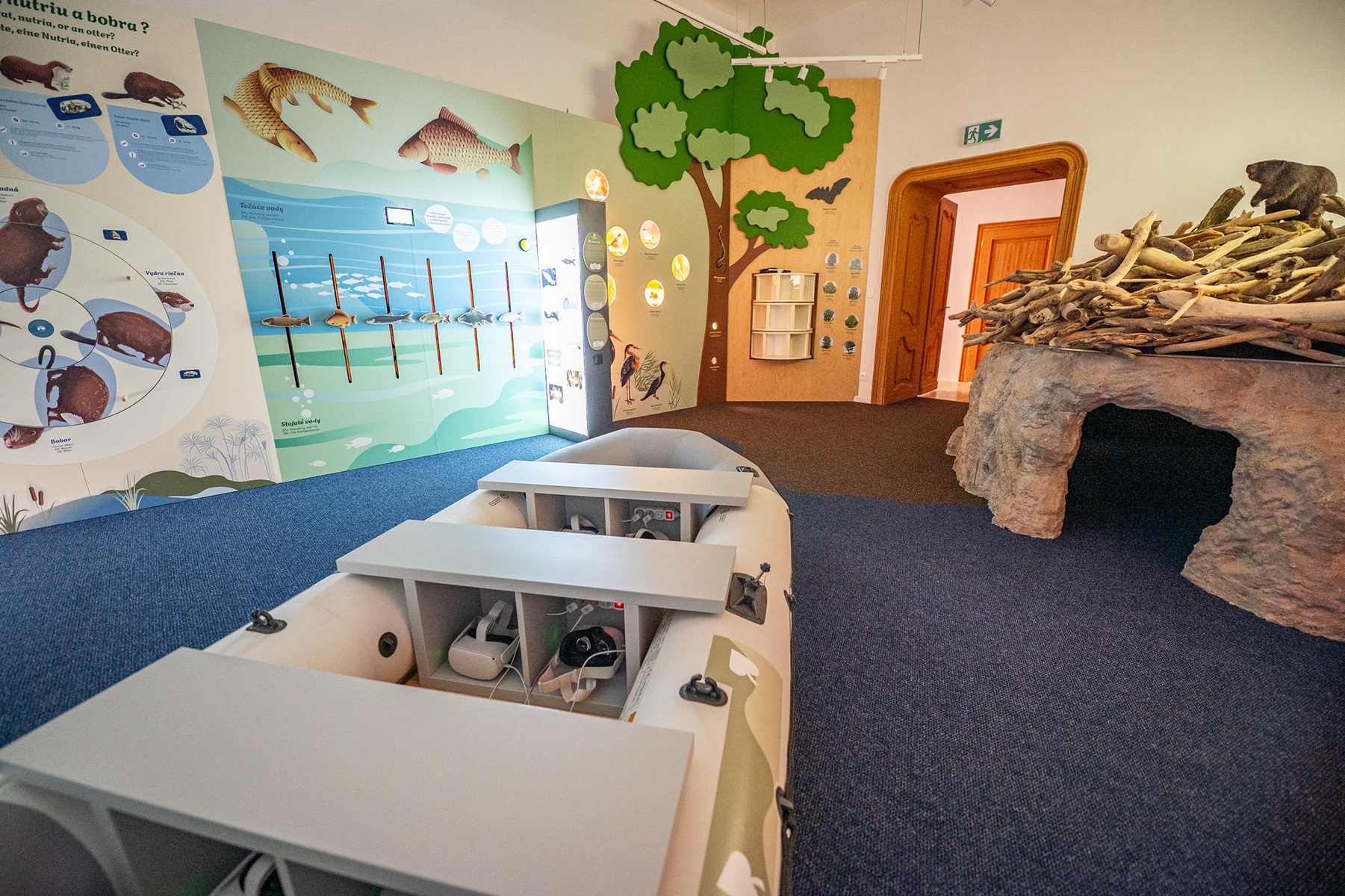
The Čunovo Ecocentre is located in the newly renovated Szapáry manor house in Bratislava. With its modern, interactive presentation of the natural heritage of the Bratislava Region, a visit here will interest not only children but adults, too. The secrets of the Danube and of floodplain forests, meadows and fields are revealed here in an engaging form. This visually fascinating exhibition promises an experience for the whole family. In it you can try to jump as far as a grasshopper, learn to recognise songbirds by their voice or explore the scent of herbs. You also have the opportunity to learn interesting facts about beavers and, through virtual reality, find out how insects see and navigate the floodplain forest. In a real model of a tractor you’ll learn methods of sustainable agriculture using a smart game.
The exposition “Water, the Danube River” presents interesting facts about the Danube, and thanks to the interactive “Wheel of Knowledge” you can explore the river’s inland delta. You can also look forward to a virtual visit to the largest river island in Europe – Žitný ostrov (Rye Island). Thanks to a 3D model that you control yourself, you’ll also come to know the Gabčíkovo waterworks and how it functions. In the “Floodplain Forest” exhibition, thanks to unique images and sounds of nature, you’ll truly feel that you are standing in the heart of an alluvial forest. You can sit in a boat, put on virtual reality glasses and “float” along a dead arm of the Danube, look below its surface or fly over the floodplain forest. You can also get to know a beaver family in this room, and children can even climb through the beaver’s burrow.
This museum also offers a “Meadow” exhibition. Here you’ll find a meadow consisting of large blades of grass and massive models of several types of insects, including a meadow grasshopper, a wasp and an ant. The true meadow atmosphere is made complete with sounds of nature. You’ll be able to try out how to see as insects see or how a meadow smells. The “Fields” exhibition will impress with a model of a tractor with a seat and basic controls. Visitors here can sit in the tractor’s cabin and, thanks to the projection, enter an interactive game, the goal of which is to revitalise the soil in the damaged landscape.
Web: kastielcunovo.sk
HLOHOVSKÝ ZÁMOK CASTLE
Hlohovský zámok Castle rises above the town of Hlohovec on a raised terrace over the Váh River valley. It is surrounded by an extensive castle park, which is also popular for its beautiful, terraced gardens. The castle hides its ancient history within; it is a rebuilt medieval royal castle with a Gothic castle chapel, Renaissance arcaded corridors and Baroque chimneys. The last members of the noble Erdődy family line, who rebuilt the originally medieval castle from the 13th century into a magnificent family seat in the form of a castle, left their mark on the site. A free-standing building of the unique historical Empire Theatre is also located on its grounds. This is the oldest still operating imperial theatre in Central Europe.
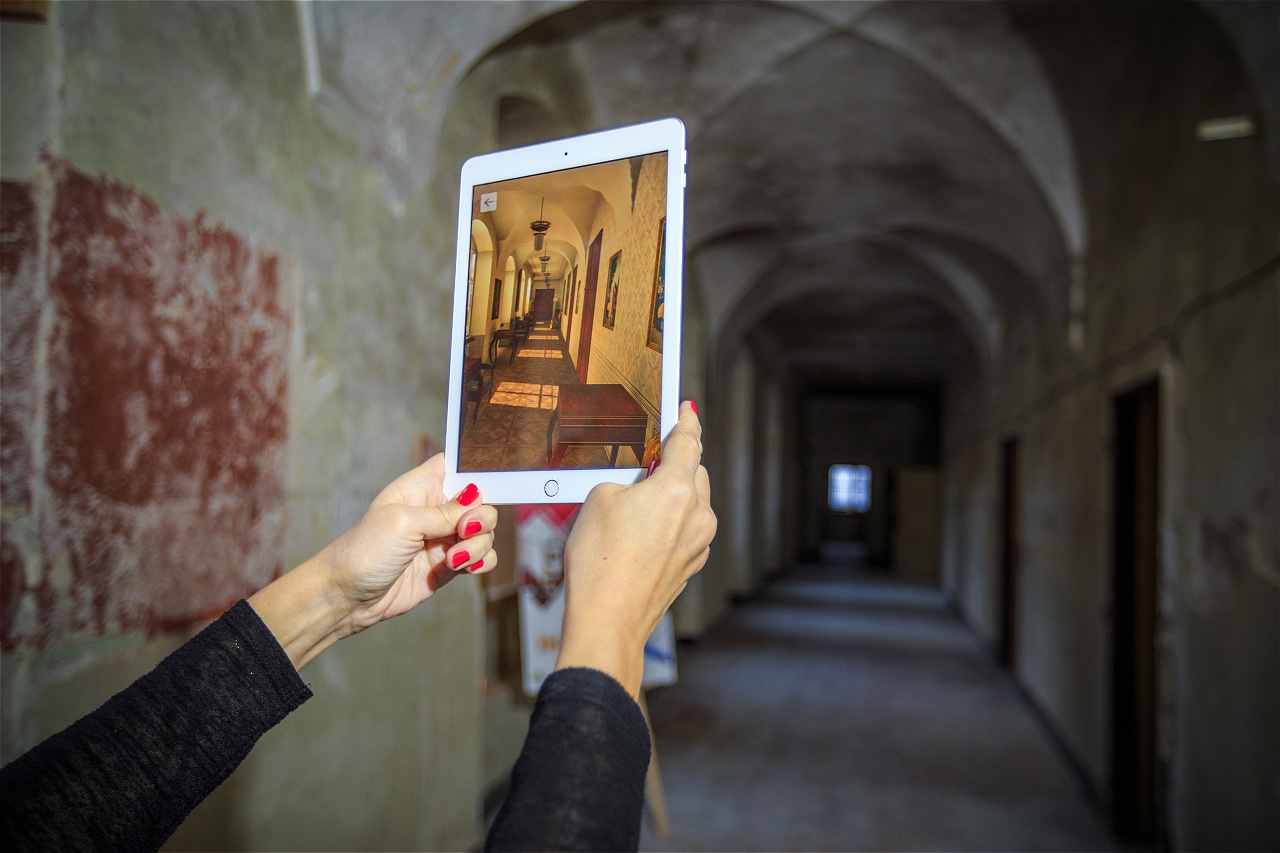
Hlohovský zámok Castle also tries to present its exhibitions in a modern way. Its tours, for example, are enriched by augmented reality. As a result, using hand-held tablets you can explore the unreconstructed areas of the castle and make direct comparisons with a fantastic graphic visualisations of their original state. The castle is at present almost fully renovated. The most recent phase took place at the end of 2024, and as a result, visitors once again have the opportunity to admire the beautiful colours of the western (courtyard) facade of the eastern wing of the castle, which is decorated with illusory marbling paintings on the columns.
Web: zamok.hlohovec.sk
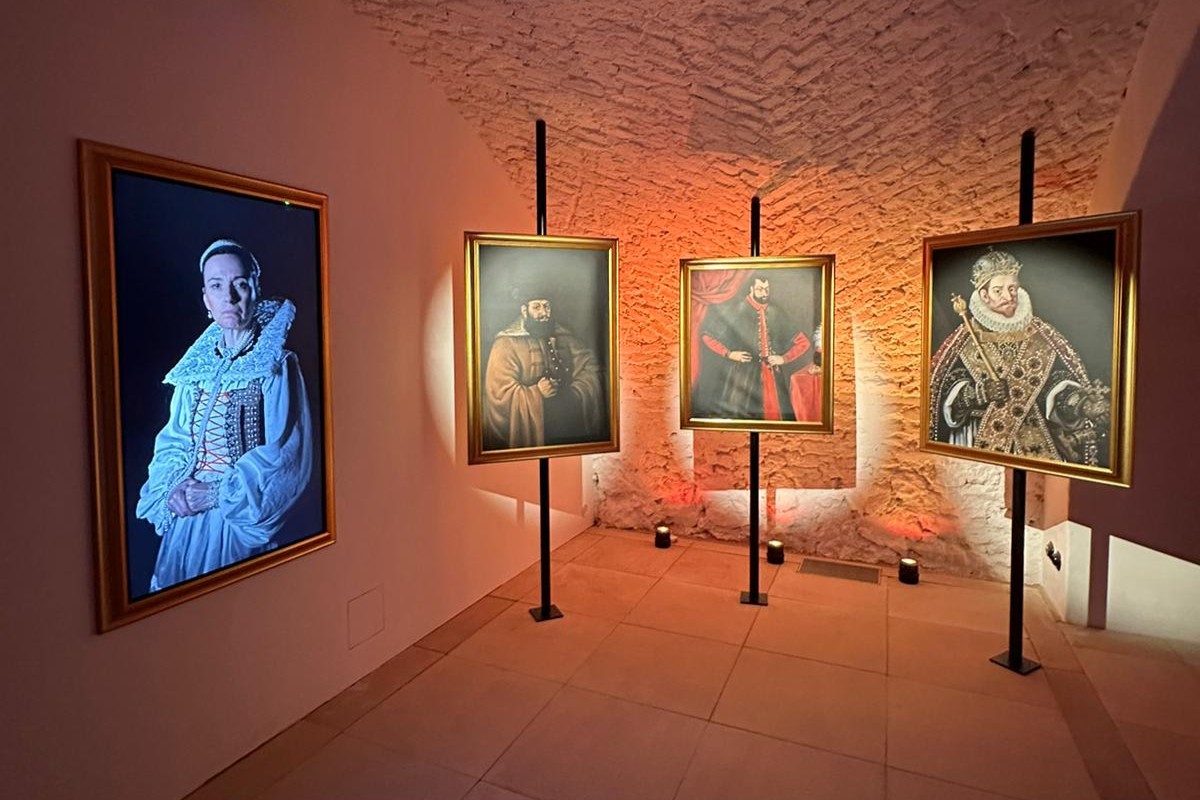
Foto: Trenčianske múzeum v Trenčíne
DRAŠKOVIČOV KAŠTIEĽ MANOR HOUSE
In the village of Čachtice, in addition to the picturesque ruins of the “secret castle in the Carpathian mountains”, you’ll also be enchanted by another tourism gem – the newly renovated Draškovičov kaštieľ Manor House. Its history stretches back to the 17th century, and the manor house is currently under the management of the Trenčín Museum in Trenčín. It has undergone a complete reconstruction and is now equipped with new, modern and interactive exhibitions. In 2025, the surrounding garden should also be reconstructed. Habán ceramics, the history of the Roma people as well as wine production are presented in the manor house not only with the collected items, but they also educate visitors with attractive visual technologies in the form of animations and sound effects.
On the first floor of the manor house, you can play music conductor in the noble rooms, discover a secret door hidden in the library and use the children’s corner with toys that children once played with at manor houses. The history of the noble families from Čachtice is presented in the form of armchairs with integrated audio content, and there is also a rare picture gallery, a historical bedroom and a library. Visitors will not be left cold by the exhibition dedicated to Countess Elizabeth Báthory in the underground rooms of the manor house. The bloody countess herself, in the form of a talking picture, will tell her story, and along with a demonstration of torture instruments, visitors can also look into the holographic theatre and find answers to questions about what it really was like with the most famous figure of Čachtice.
Web: muzeumtn.sk/en
NITRIANSKY HRAD CASTLE
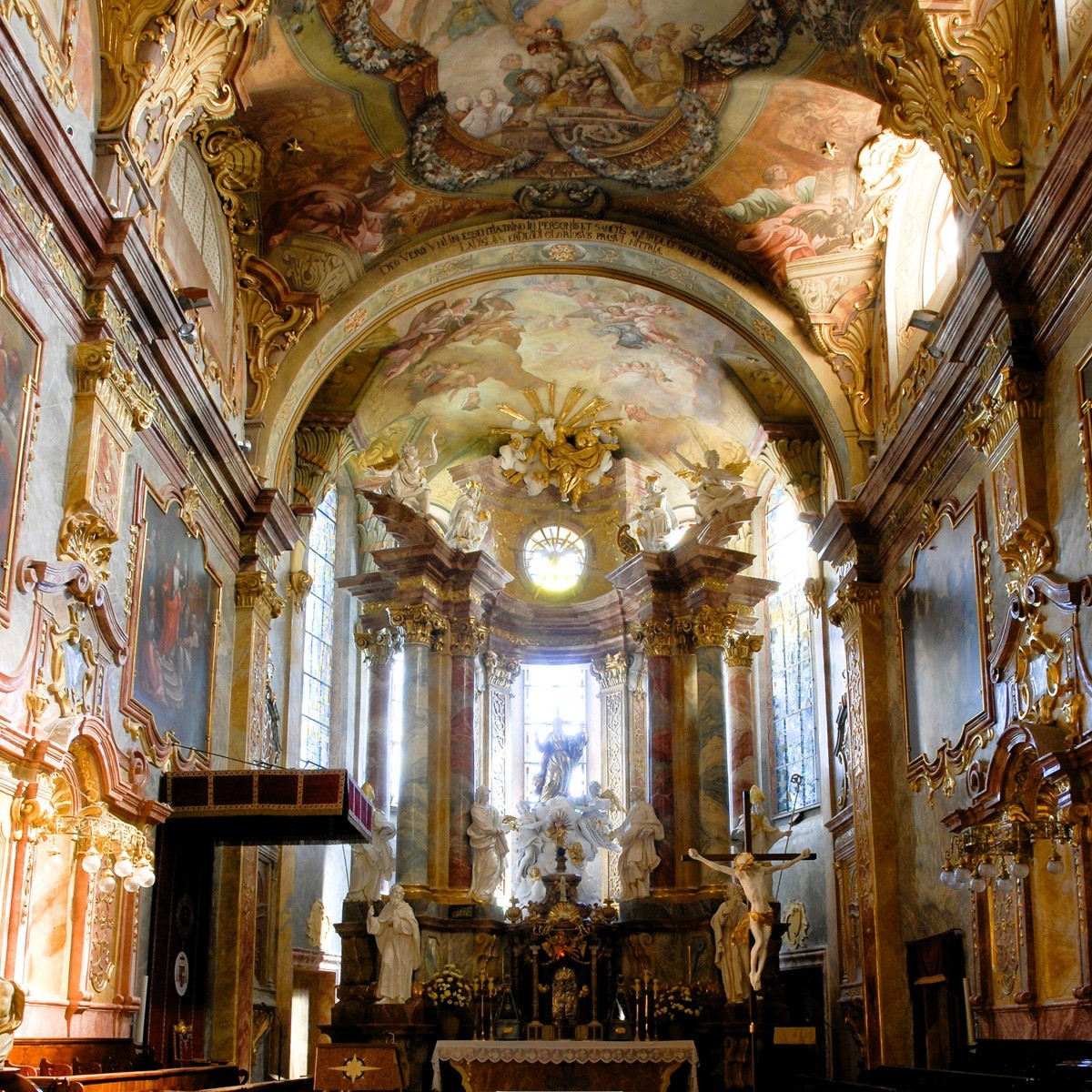
Nitriansky hrad Castle is not only an important pilgrimage site linked with historical figures such as Prince Pribina, Prince Svätopluk or the missionaries St. Cyril and Methodius. The Cathedral of St. Emmeram, which dominates the castle, can boast of brilliant artistic decoration, which ranks it among the most beautiful examples of Baroque decoration in Slovakia. During restoration work in 2011, a large medieval Gothic fresco from the 14th century was discovered here, and it has been preserved in its authentic condition, while attracting visitors with its colourfulness. The castle can also boast of being the home of the first diocesan museum in Slovakia. We find in it a long-term exhibition, entitled “When Scripture Speaks”, of literary monuments closely linked to the beginnings of Christianity in Slovakia as well as a treasury in which mainly rare chalices and monstrances are on display.
The cathedral tower, which was destroyed at the end of the Second World War, also had a rich history. A fire once broke out in it and destroyed all the bells. This event is captured in the newly opened permanent exhibition “The Humiliated Tower. The Story of the Tower of the Cathedral of St. Emmeram”. You can see a rare artifact in it – an angel – and learn the story of its discovery. The angel was part of the decoration of the rare Podmanický bell from 1525, which was destroyed during the bombing of the tower in 1945. It became the only preserved artifact from the destroyed bells. Pupils from primary and secondary schools also have the chance to get acquainted with this interesting story, as the museum has prepared the educational programme “In the footsteps of the lost angel”.
Web: nitrianskyhrad.sk
SLOVAK MUSEUM OF NATURE PROTECTION AND SPELEOLOGY
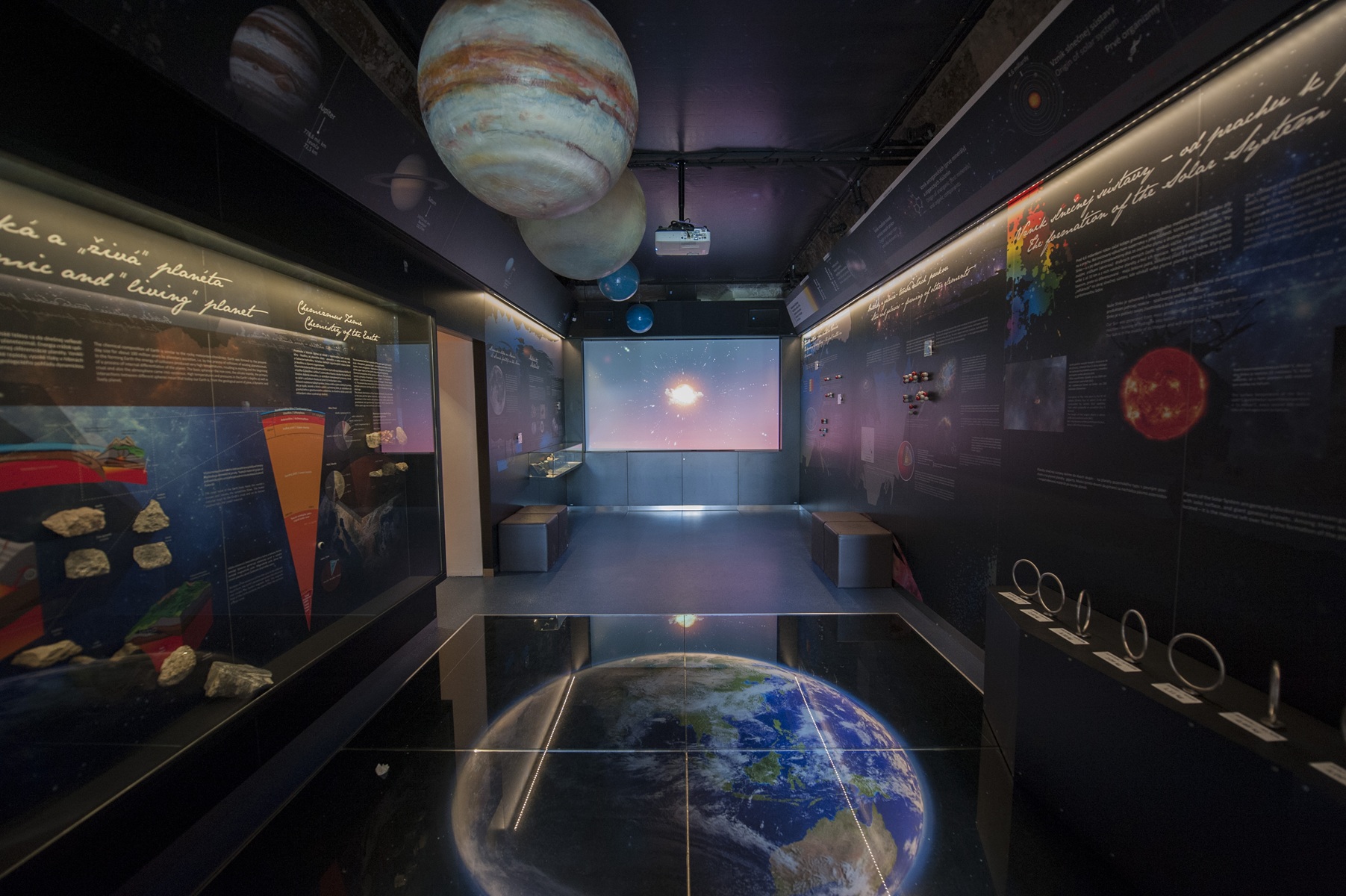
The Slovak Museum of Nature Protection and Speleology in Liptovský Mikuláš is a modern natural history museum that focuses on Slovak nature and caves and more. Visitors both young and old will find answers to many interesting questions here. They’ll learn that life can exist even in the inhospitable environment of caves, and whether it is possible for minerals to sing. Young and old alike will learn how our solar system was formed and can try out how gravitational force acts on its planets.
The museum will guide you through the history of life on Earth from the Palaeozoic to the Quaternary periods. On this journey you’ll learn what our human ancestors looked like, what it was like with mammoths and dinosaurs, and you’ll see the fossil remains of a cave lion skeleton found in the Západné Tatry mountains and a 245 million-year-old pachypleurosaur from the Demänovská dolina valley. You’ll get to know about mining in Slovakia, too. The superhuman effort of miners when mining is documented by a model of a narrow, hand-carved passage.
In the exposition “Karst and Caves of Slovakia” you’ll learn how caves are formed and come to know various forms of cave decoration – stalagmites, stalactites, stalagnates, straws, cave pearls and aragonite flowers. You’ll be surprised by the impressive size of the model of a cave bear, whose bones were thought to be dragon bones until the 19th century, and you’ll find out how caves are discovered and mapped, what tools are needed to do this, and if you have a little courage, you can even try climbing using a cave crawler.
You’ll also see the various habitats of Slovakia in the museum and how human activity affects them. You’ll become familiar with the work of lumberjacks, with a model of a reversal point forest railway, sheep herding, beekeeping and hunting, the history of skiing, tourism and mountain rescue service. You’ll visit Rainer’s hut – the oldest alpine shelter in the High Tatras – or model the relief of the landscape yourself on an interactive topographical map. You’ll come to know the work of a caver or the mysterious kingdom of mushrooms, climb into a bear’s den or relax in the museum garden. What’s more, anyone who climbs the 55 steps to the observation tower will find a beautiful view over the entire Liptov region.
Web: smopaj.sk/en
LITTERRA
If you are seeking a truly exceptional place to take your children on a trip, add Revúca to your list of destinations, as it is home to the creative centre and interactive museum of stories Litterra. This is a museum of stories like you have never seen before, a unique space that was created by the renovation of the historic First Slovak Gymnasium in Revúca. It connects the past with the present and brings a new perspective on what a museum can look like. The architects preserved the authentic character of the original building and connected it with modern elements. The whole area, created by combining three buildings and outdoor spaces, has become a cultural and social hub.
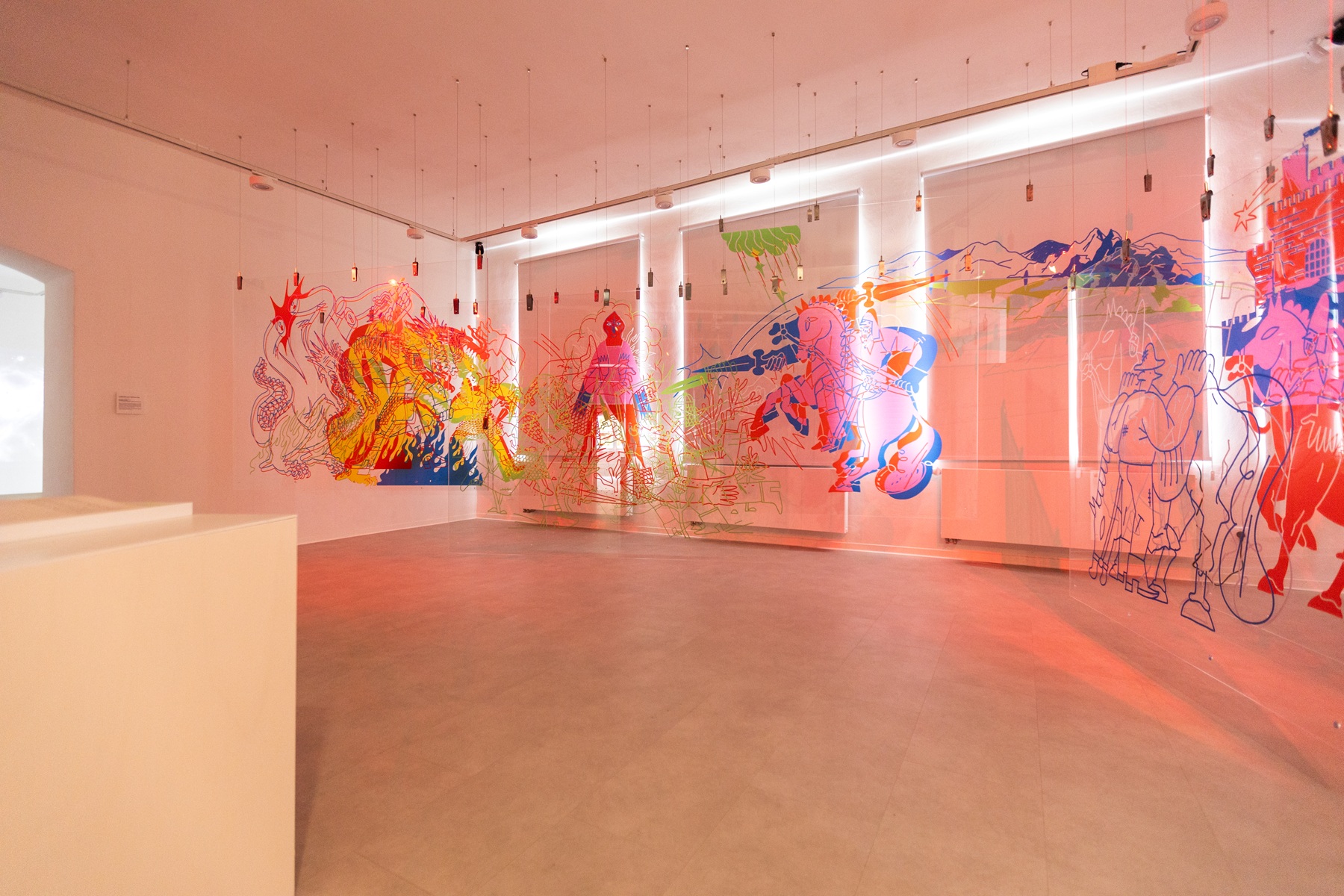
No one will criticise you for touching the exhibits at Litterra; in Litterra this is actually desired. The museum space is divided into four pavilions that allow you to walk through the stories of words, writing, images and even reach the stars. The first pavilion is dedicated to sound, focusing primarily on audio experience and auditory perception. Here you can listen, for example, to audio recordings of authentic folk storytellers. In the pavilion dedicated to writing, people create, work, feel, play, draw and learn. Aside from runic and cuneiform writing, you can create with ink, write on chalk boards, on typewriters and on machines for the blind. The image pavilion shows works of art, an unconventional illustrated version of the fairy tale Popolvár, comics as perceived through board games or a graphic novel projected on various materials.
The sci-fi concept of Hviezdoveda (The Science of the Stars) in the building’s attic will draw you into the world of space. This pavilion is dedicated to the book Hviezdoveda by Gustav Reuss, a native of Revúca, which was written seven years earlier than Jules Verne’s world-famous A Journey to the Moon, so it certainly deserves its own space in the museum of stories. In the novel, the main character Krutohlav flies from Muráň straight to the Moon in a giant hot air balloon and experiences various adventures along the way. Whether or not he succeeds and what he experienced, you can find out when you visit the museum.
Web: litterra.sk
ČERVENÝ KLÁŠTOR MUSEUM
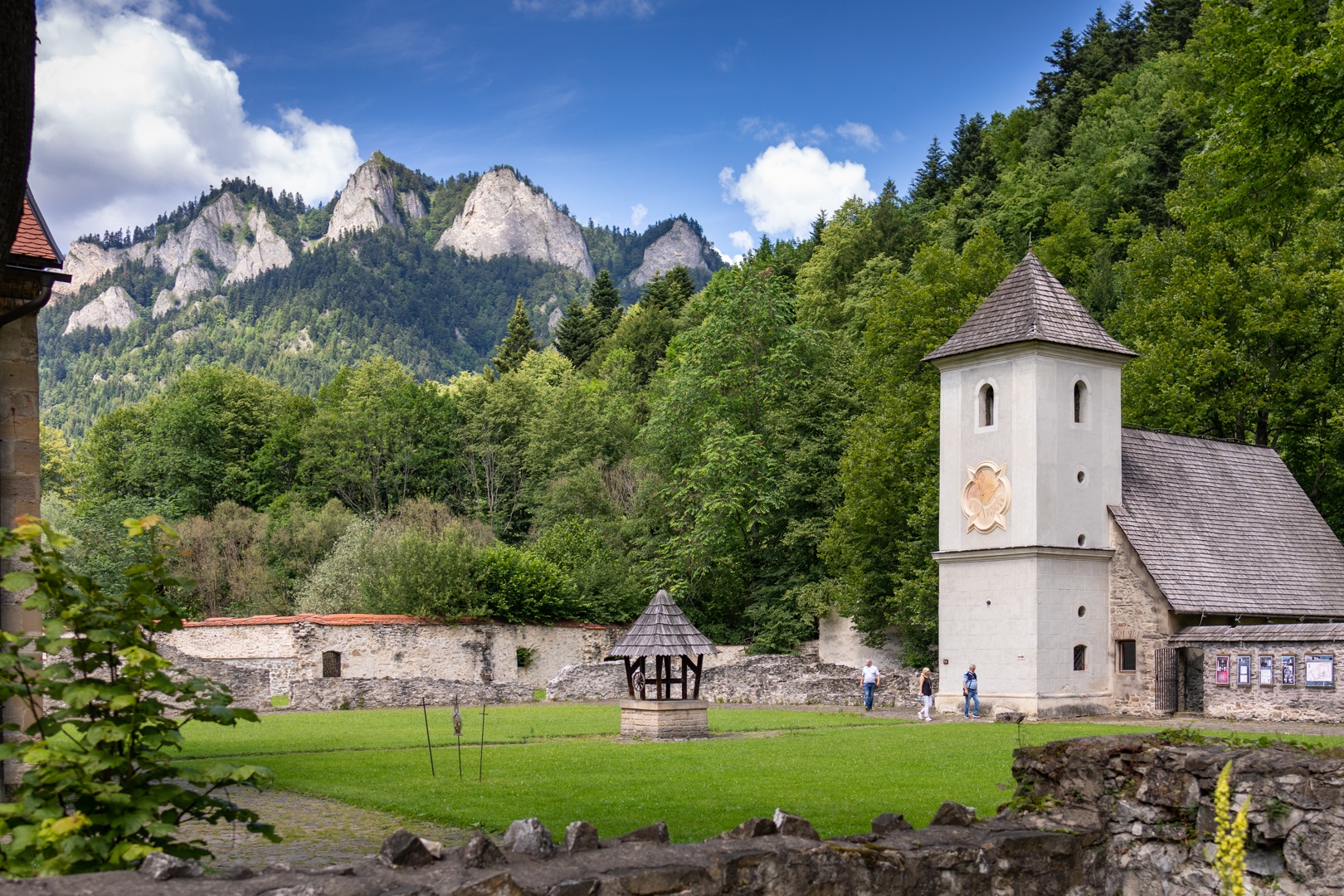
You can discover an attractive, renovated museum exhibition in the Červený Kláštor Museum, located in the premises of a Carthusian monastery, which is also a national cultural monument. The monastery, with its unique atmosphere, is one of the few preserved examples of the architecture of the Carthusian and Camaldolese orders in Slovakia. This magical place was made famous in particular by one of the most famous residents among the local monks – the Camaldolese friar “Flying” Cyprian. The monastery offers visitors a modern museum exhibition comprising three parts – the History of Červený Kláštor (or the “Red Monastery”), Monastic orders in Slovakia and the History of monument care in the Slovak Republic. The life of the Carthusian and Camaldolese orders is presented in an interactive form attractive for both children and adults.
For example, you’ll find a digital herbarium in the exhibition which contains 20 herbs from Cyprian’s herbarium. When you pull out a drawer with an herb, the display shows an illustration of it as well as information about which part of the body the medicine affects and in what form. Ten herbs in the drawer contain a copy of the herb from the original Cyprian herbarium, and another ten contain a cotton swab soaked in the essential oil of the herb instead of a copy, so that visitors can also smell it. You can then purchase products from medicinal plants as souvenirs (teas, soaps, ointments or tinctures) in the monastery, which are handmade from raw materials from the monastery grounds. The raised beds of medicinal herbs are situated in the ruins of the monks’ houses, and visitors also have access to a clear information system about the herbs grown.
While living at the monastery, the monks copied the Bible and other books by hand. Another interactive element of the museum is the transcription of letters, where visitors can attempt to transcribe a letter. The computer will then evaluate how many points they get for their writing skills. You can also become familiar with the life of monks in the past. Two monks, a Carthusian and a Camaldolese, will be displayed on a large screen. After one of them is selected by touching a sensor, the chosen monk will start talking about his life. At the same time, it offers the opportunity to choose additional information about his work that is of interest to the visitor. The Dentaphone in the shape of a kneeling bench is also unique, as it transmits sound waves through the bones. After placing their elbows on the circular sensors and pressing their hands to their ears, visitors will hear the singing of Gregorian chants “in their heads”. The exhibition also includes a cinema, which screens a short film about the Červený Kláštor. The construction development of the monastery is illustrated using an animation.
EAST SLOVAK MUSEUM IN KOŠICE
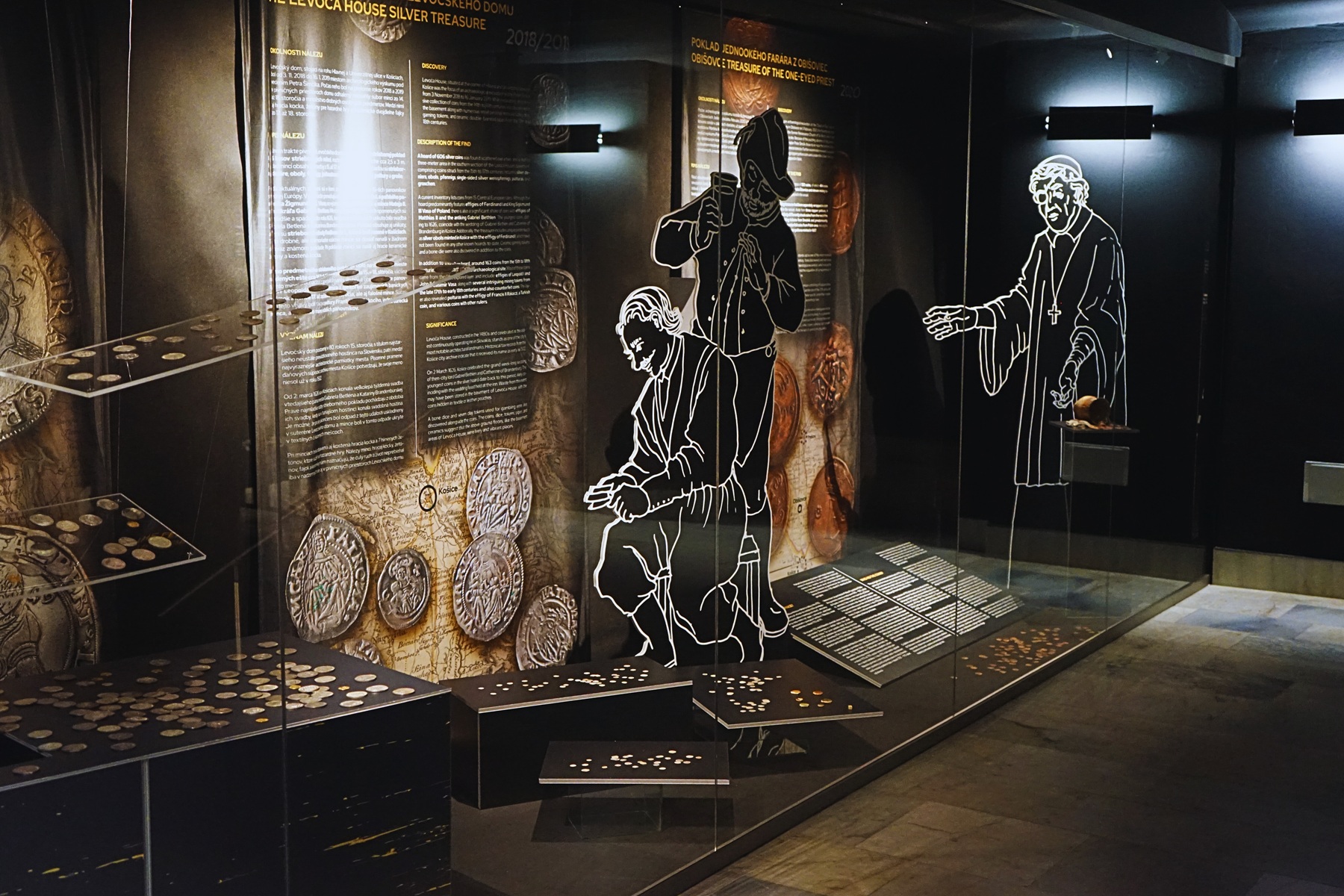
The East Slovak Museum in Košice is one of the oldest and most important museums in Slovakia. Its collections are dominated by the Košice Gold Treasure, which was discovered in 1935 during construction work. This treasure, consisting of 2920 gold coins, ducats and double ducats, three gold medals and a Renaissance gold chain, is one of the most important on both a European and world scale. It was hidden during the turbulent times of the estates’ revolt against the ruling Habsburgs. The rich representation of different types of coins and wide geographical scope from a large part of Europe rank the Košice Gold Treasure among the artistic jewels of Europe.
What makes it truly unique is that the treasure has been preserved intact. It is accessible to the public in a specially adapted vault in the historical building of the East Slovak Museum in Košice. In January 2025, the museum commemorated the 55th anniversary of the opening of this unique exhibition to the public. On that occasion, a new exhibition “The Journey to the Treasure” was opened, so visitors have the opportunity to visit an experiential and interactive exhibition that not only introduces the discovery of the famous Košice Gold Treasure, but also the processes of obtaining gold, its processing and many other interesting facts. A component of this engaging exhibition is a presentation of other significant treasures that have been found in Slovakia.
Web: vsmuzeum.sk